Nearly twenty years on, I've been back through the original Assassin's Creed — and I suspect where I've landed will be lower than some of you are expecting, given how much I love this series.
The reason is simple. This is version one. It's an idea, beautifully presented, that doesn't really become a game until version 2.0. That's not a dismissal. I've always thought of this one the way you think about a concept car: you see it, you understand what's being proposed, you can see what it could become — but it isn't the car you're going to drive.
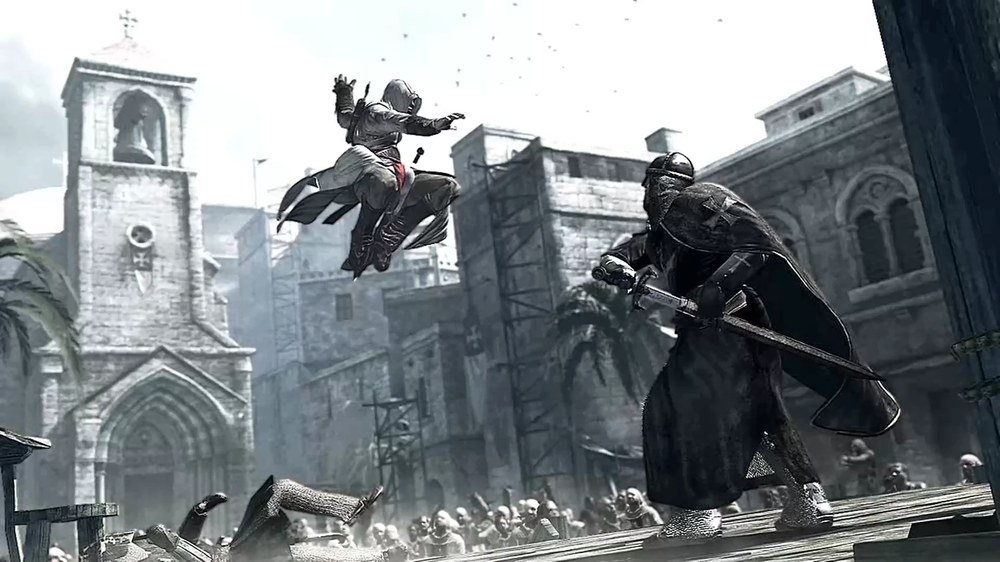
It started out as a Prince of Persia game
Here's the bit I'd half forgotten, and it explains an enormous amount about how this game feels. Ubisoft Montreal started it as the next Prince of Persia, after The Sands of Time. Patrice Désilets' team were building something called Prince of Persia: Assassins, in which the prince was controlled by the AI and you played the assassin guarding him. Somewhere along the way the prince was dropped, the marketing department came up with a new name, and the bodyguard became the main character.
Which is to say: a huge amount of what makes this game extraordinary — the climbing, the free running, the sense of a body moving through architecture — came out of a series built entirely around exactly that. And a lot of what's missing is everything a Prince of Persia game never needed to have.
Why I wanted to play it during a PS3 month
It's a multi-platform game, obviously — PS3 and Xbox 360 in November 2007 — so it's not a PlayStation 3 showcase in the strictest sense. But I wanted something that demonstrated the difference the seventh generation actually made. We hadn't seen games at this scale before: this level of cinematic storytelling, these huge environments, this many people moving around in a city. Developers were pushing the consoles to give us something genuinely different, and this is one of the clearest examples of it.
And it still looks amazing. I'd put it among the best-looking games of that generation. The draw distance, the detail, the birds wheeling around overhead, the moment you climb one of the really tall buildings in Acre or Damascus and watch the environment unfold beneath you — that's spectacular, and it was spectacular then.
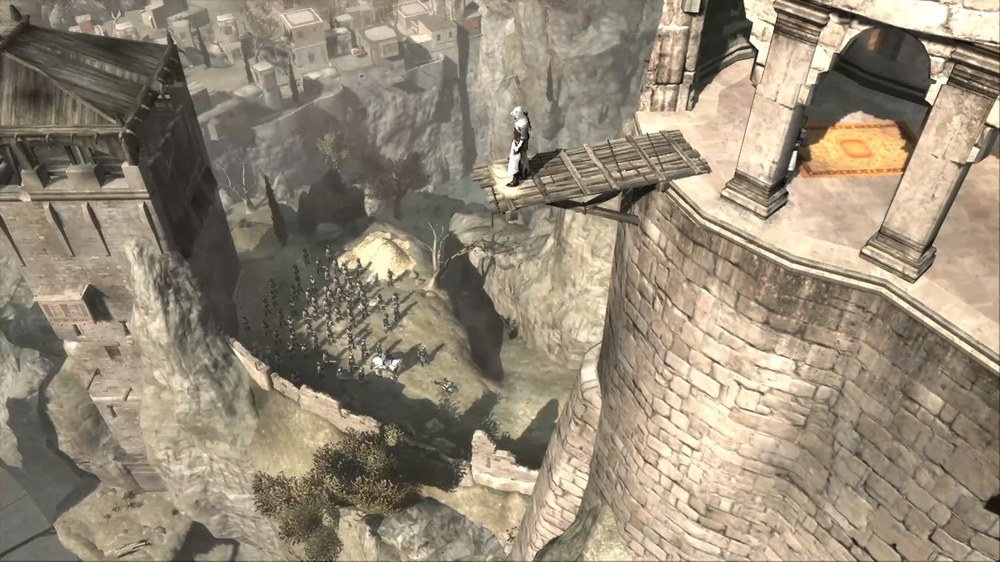
Where it really wins is the environments. Climb a tower, look out, and it genuinely is something quite special.
The bits that haven't aged
The structure is the problem, and it was the problem at the time. It landed on 81 on Metacritic, and if you read those reviews now they say almost exactly what I'm about to: gorgeous, atmospheric, original, and repetitive. Climb a tower, gather intelligence, assassinate someone, rinse and repeat. Play it all the way through and you absolutely feel it. The NPC dialogue in the cities repeats constantly, and you'll be asked for coins roughly every five microseconds.
The controls are noticeably different from the later games, and clunkier for it. Altaïr occasionally decides to leap in precisely the opposite direction to the one you intended. The combat is weird — I'd genuinely forgotten how weird until I played it again. Contemporary reviewers called it one-button combat and they weren't being unkind; all the ingredients are there, but the parries and the finishers and the clever extra moves that make later entries feel so good hadn't arrived yet. And it is far easier in this game than in later ones to catch an innocent bystander, which lands you in trouble immediately.
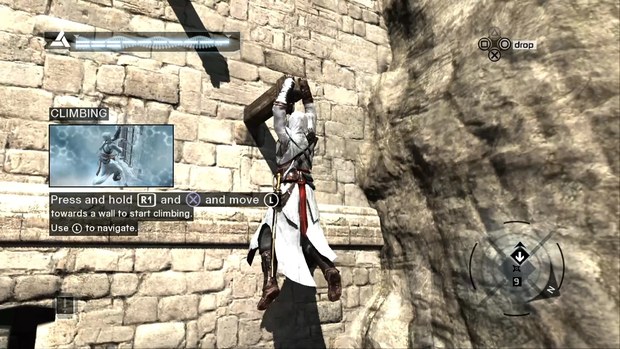
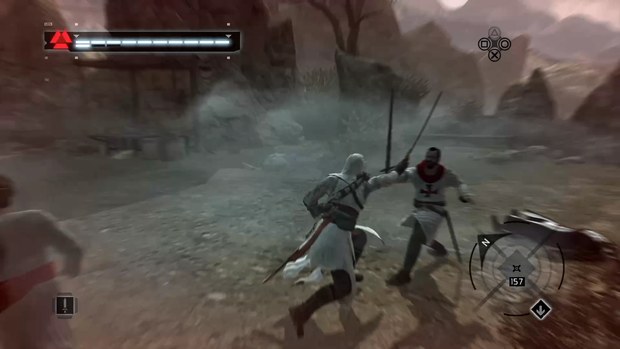
One more thing: the long tutorial. As someone who's played a lot of Assassin's Creed, being walked through how to walk, how to look and how to assassinate was tiresome, so I skipped past it for the video.
Desmond, the Animus, and what the series quietly dropped
The premise is wonderfully bonkers and it does work — you're Altaïr Ibn-La'Ahad in 1191, during the Third Crusade, but technically you're also Desmond Miles, a modern-day bartender reliving ancestral memories through a machine called the Animus. I like the elegance of what it allows: dying isn't losing a life, it's desynchronisation. You did it wrong. That's a smarter idea than respawning.
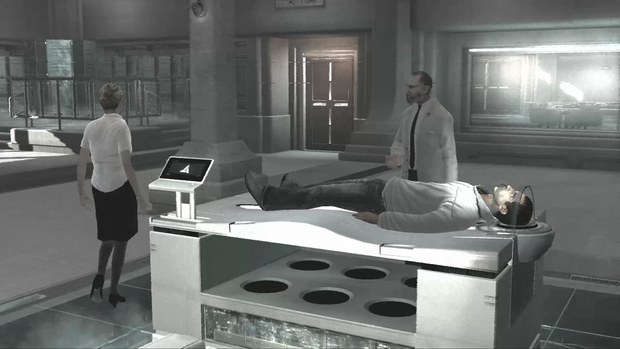
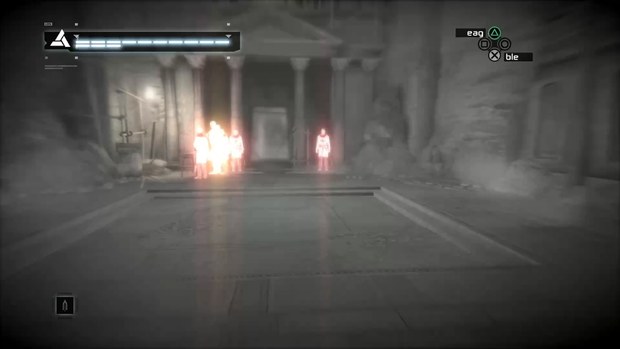
What I'm less sure about is the present-day framing itself, and I don't think I'm alone. It got less and less prominent across the series until it vanished more or less entirely — there's essentially none of it in Shadows. I prefer it that way. People want to be in the historical settings and play the historical characters. They don't want to be faffing about in a 21st-century office.
Where it sits in the franchise
For me the peak of this era is the second game — Ezio Auditore, Florence, and a story strong enough to underpin all the side missions. The follow-up you're thinking of is Brotherhood, from 2010, set in Rome; Bloodlines is the PSP spin-off from 2009, which is confusing precisely because it's also an Altaïr story set in 1191. Brotherhood is the other great one.
Three was the first time I was genuinely disappointed: you go from twelfth-century crusader cities to colonial Boston, from towering buildings to hunting rabbits and climbing trees. Four was a real return to form — tenuous as an Assassin's Creed game, but the ships and the pirate business are fantastic. Syndicate I liked mostly because I love the setting, Victorian London in 1868, though it's a lower point for the series. Mirage felt like a return to form. Valhalla is the one that hurts: Vikings should have been a perfect fit and I really wanted to love it, but I came away disappointed. Shadows is good, and still repetitive, and not without its problems.
It's been a real mixed bag, and Ubisoft have been accused of shovelware for a reason — the frequency makes things feel rinse-and-repeat, and some of the later open worlds are so stuffed they're overwhelming rather than structured. But the concept still works, which is why they're still making them, and why even the weaker ones review reasonably well.
So, should you play it in 2026?
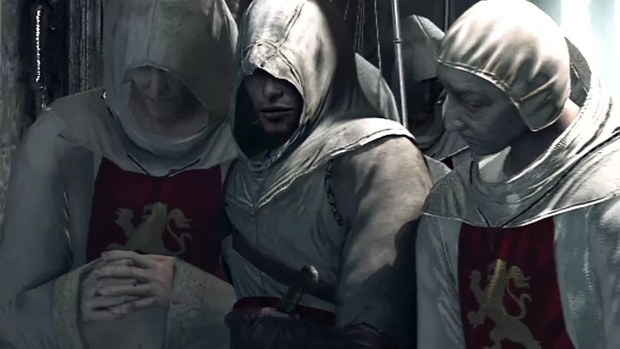
If you've never touched the series and you like open worlds, yes — go and look at it. Altaïr isn't the character Ezio is, but he's interesting enough, the story's decent, and the setting is handled with care even where it takes liberties with history. Just know what you're getting: the scene-setter, not the payoff. It's the overhead GTA to GTA's later self, the SSX to SSX Tricky. The ambition is enormous and the polish came later.