Donkey Kong Land is a genuinely fantastic little game, and if you own a Game Boy I'd tell you to go and seek it out. But there's a big caveat attached, so let's get it out of the way first: play it on a Game Boy. Not on an emulator, not blown up on a big screen. It simply doesn't scale, and something about that tiny handheld display makes the whole thing click in a way it never quite does anywhere else.
I proved that point rather more thoroughly than I intended while recording. More on my humiliation later.
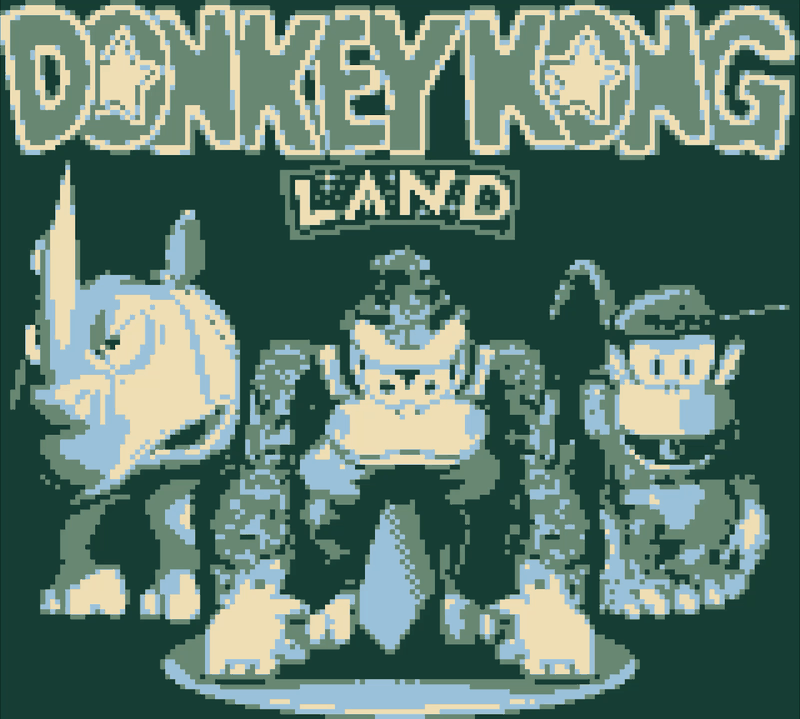
It isn't Donkey Kong Country, and it never wanted to be
This is the bit people get confused about. Donkey Kong Land, released in 1995 and developed by Rare, isn't a port. Rather than trying to squeeze the SNES game onto the Game Boy, Rare built a brand new adventure — its own levels, its own environments, its own enemies, its own bosses.
That was a deliberate argument someone had to win. Rare's Game Boy programmer, Paul Machacek, talked co-founder Tim Stamper round to the idea that an original game was a better use of the team than a cut-down conversion. He was right. Development started in 1994, running alongside Donkey Kong Country and before that game was even finished — which is why you can see its DNA running all the way through this one without it ever feeling like leftovers.
What they did carry over was the trick that made Donkey Kong Country look so spectacular in the first place: pre-rendered 3D models converted into sprites, through Rare's Advanced Computer Modelling technique. On the Game Boy that gives you large characters, detailed backgrounds and some really excellent animation, all of it appearing on a four-shade handheld screen. Technically it's seriously impressive stuff.
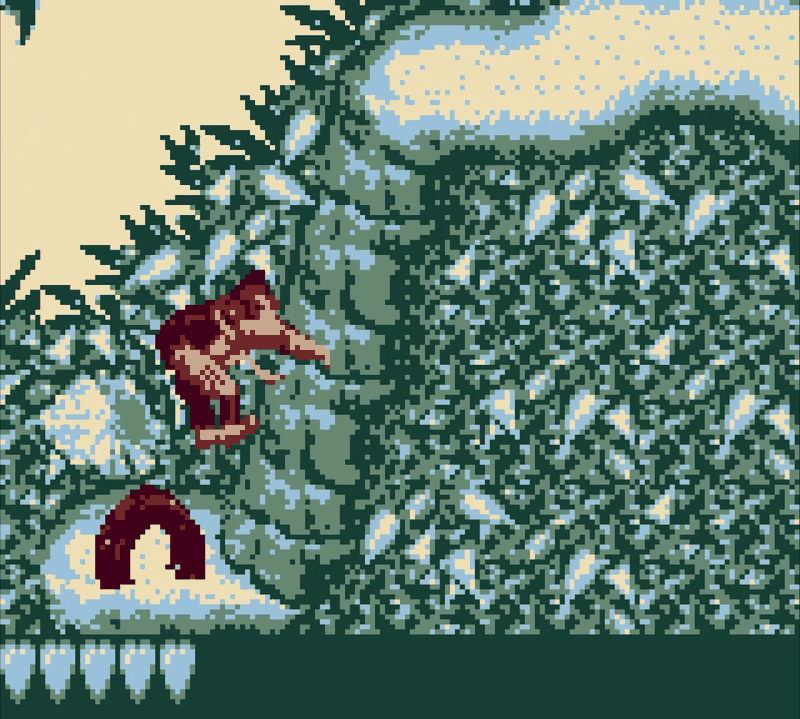
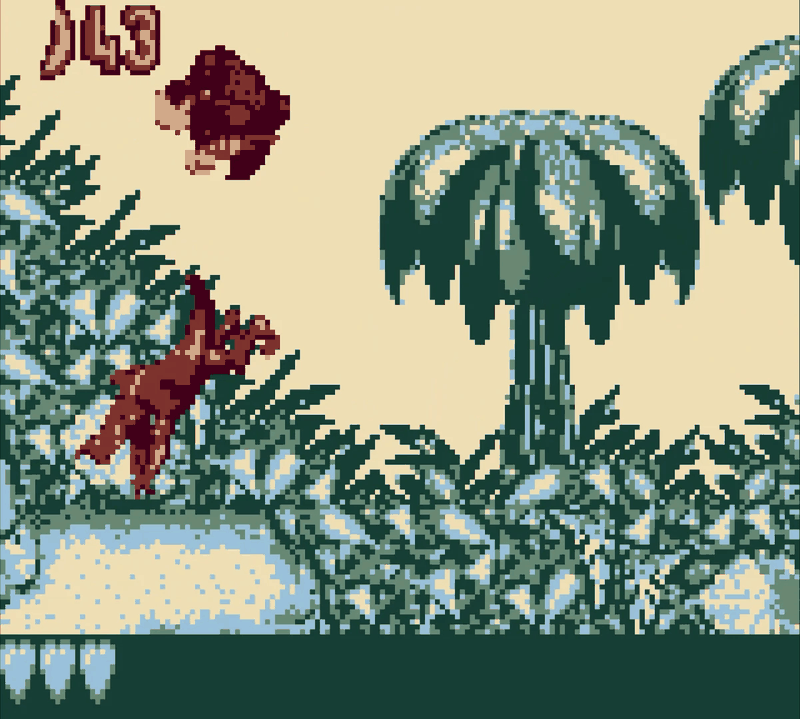
Rare were really asking the question: how close can we get to that experience on this little handheld? Considering the hardware, the answer is pretty close.
The soundtrack does the same job on the audio side. Music from David Wise and Graeme Norgate, doing their best to capture that Donkey Kong atmosphere through the Game Boy's sound hardware — and it's a really, really lovely soundtrack. Very Donkey Kong. What they managed to squeeze in there is amazing.
And of course there's the other thing Donkey Kong Land is instantly recognisable for: that wonderfully vibrant banana yellow cartridge.
A trilogy, and a port that came much later
It was a huge success — 3.91 million copies sold, making it the best-selling Donkey Kong game on a Game Boy — and it kicked off its own trilogy, with Donkey Kong Land 2 in 1996 and Donkey Kong Land III in 1997, both on those same fabulous yellow carts. An actual port of Donkey Kong Country did eventually turn up on a Nintendo handheld, but not until the Game Boy Color version in 2000, five years after Land.
Critically it did well at the time, too. Scores landed roughly between 81% and 93%, and GamePro went as far as naming it their Best Game Boy Game of 1995. The disagreement wasn't really about whether it was good — it was about whether it stood level with the SNES original, which is a much higher bar than most handheld games get measured against.
How it actually plays
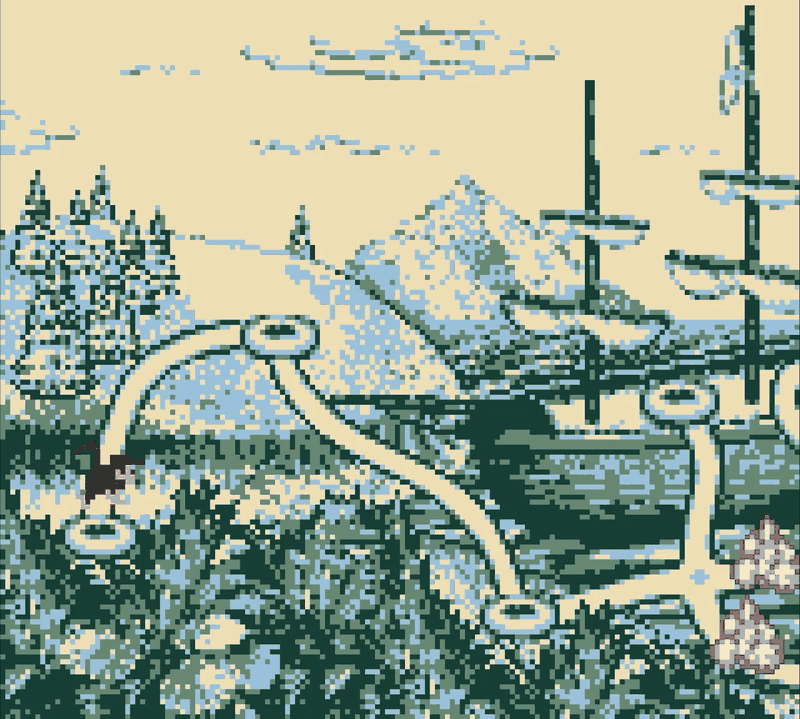
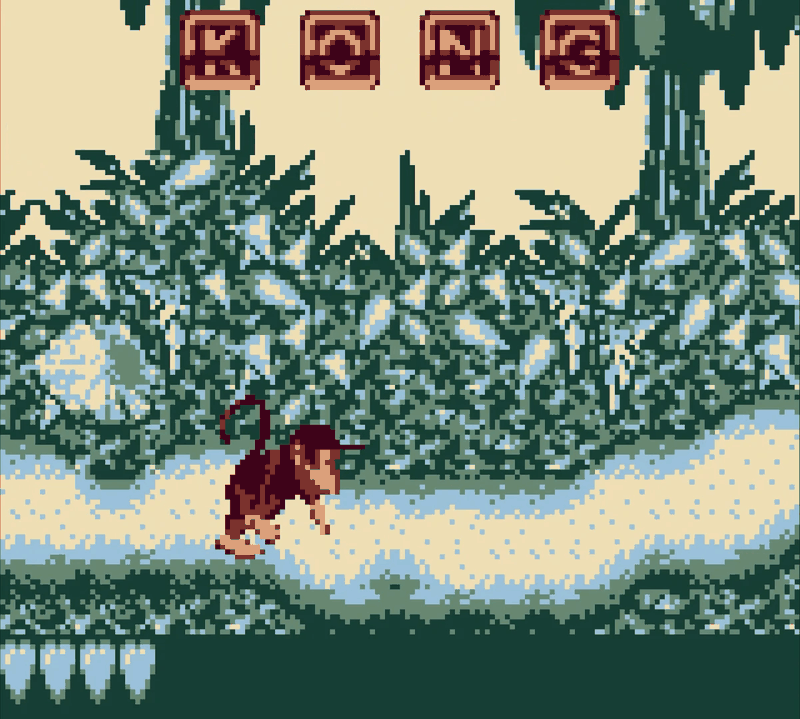
Controls will be immediately familiar if you've played Country: you roll, you jump, you pop crates to pick up Diddy Kong, and yes, the rhino turns up too. The one real thing I'd flag is that the screen gets busy, and it can be genuinely tricky to see what's going on. On a bigger display that's more obvious; on the Game Boy it's a small detail.
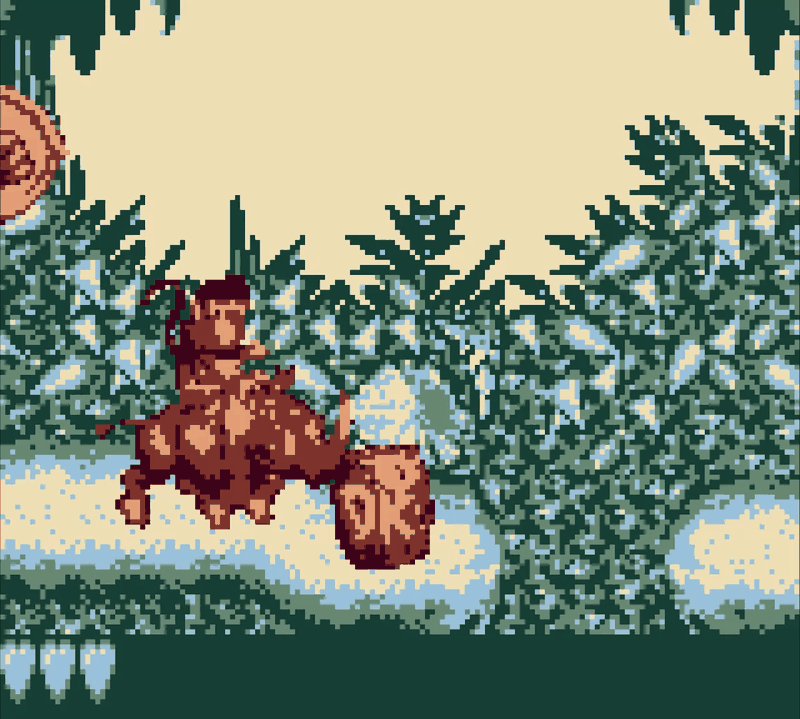
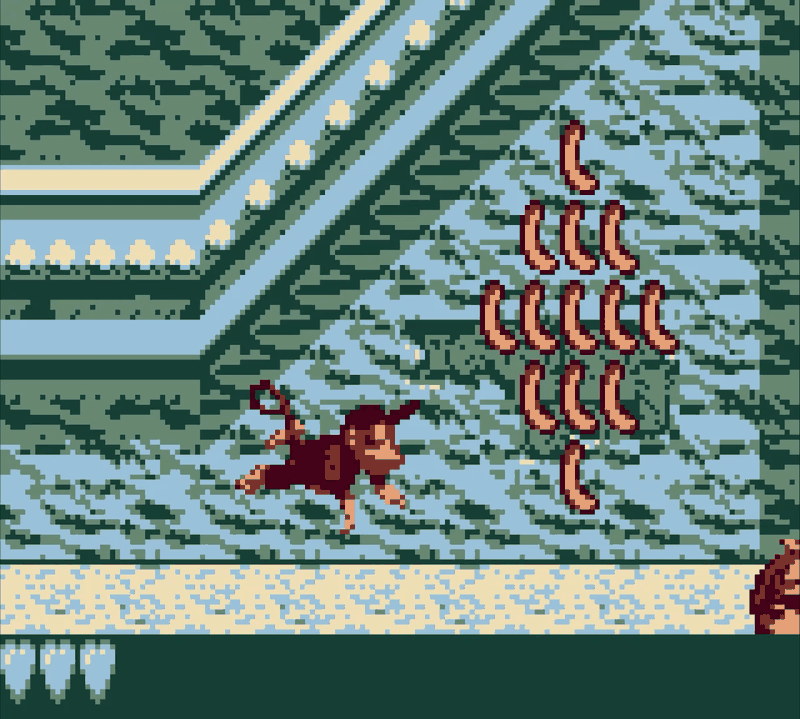
The other thing I noticed — and it's the useful takeaway from my playthrough — is that this game wants to be played quickly. When you commit and keep moving, it flows. When you're cautious, it punishes you. Guess which one I was doing while trying to talk to a camera at the same time.
Because I was, frankly, appalling. I threw away lives for no good reason on the very first level, fell down a ravine I've fallen down before, and eventually ran the whole thing into the ground to spare you all any more of it. I did at least stumble into a bonus level I'd never seen, which tells you something about how much of this game I've actually explored. I'm not going to blame the controller, or the lag, or the emulator. A bad workman blames his tools. I just need to do better.
What I will say is that these Donkey Kong games are tricky. Donkey Kong Country isn't an easy game either — I adore it, but it's fraught with difficult bosses. Land is cut from the same cloth.
The verdict
I'd never played this one back in the day — I only ever played Donkey Kong Country, on the SNES and later on the Game Boy Color. But I'm fairly certain that if I'd had this in the mid-90s I'd have absolutely loved it. Being able to take something that feels like Donkey Kong Country on the go with you, while also being its own thing, would have felt so cool.
A few little things keep it off top marks — mainly the busy, hard-to-read screen. If you want the best version of this experience overall, I'd still point you at Donkey Kong Country on the Game Boy Color, which is fantastic, or the original on the SNES. Those are, in my opinion, better games. But Donkey Kong Land stands on its own as a great technical achievement, and it feels like a proper Donkey Kong game without sacrificing too much to fit onto that monochrome display.
Go check it out. Just do it on a Game Boy.