When Nintendo launched the original Game Boy in 1989, it didn't take long for people to start asking the obvious question: where's Zelda? The NES had already given us two legendary adventures, and on the Super Nintendo, A Link to the Past was busy redefining what an action adventure game could be. Surely it was only a matter of time before Link turned up on Nintendo's handheld.
In 1993 we got our answer — just not the one anyone was expecting. Instead of a scaled-down A Link to the Past, Nintendo built something entirely new: a brand new adventure set on the mysterious island of Koholint (which I absolutely mangle in the video), with a cast of quirky characters, some very unusual cameos, and one of the most memorable stories the series has ever told. Five years later came Link's Awakening DX on the Game Boy Color, which is the version I've been playing.
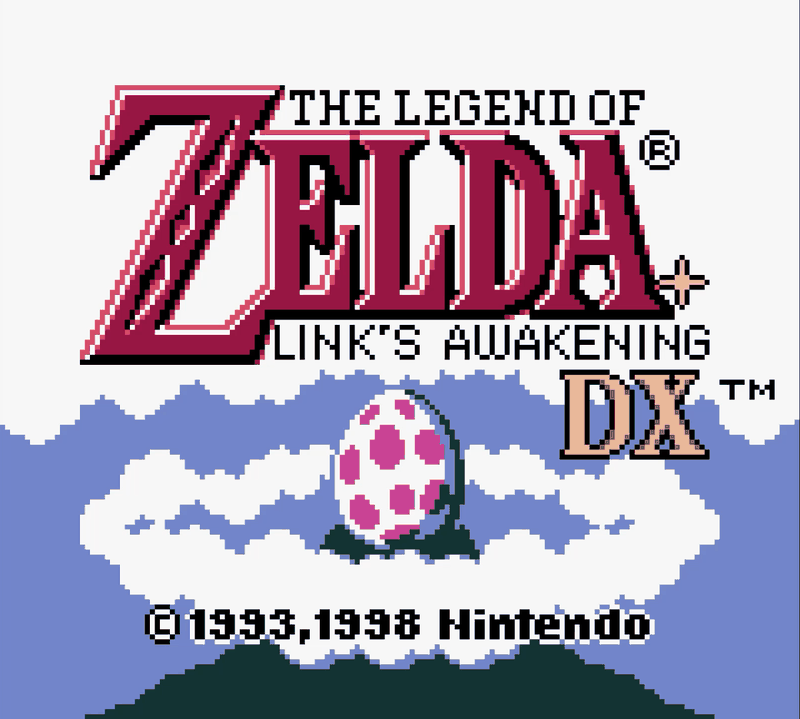
And DX isn't just a splash of colour. The visuals were completely refreshed, there's a brand new Colour Dungeon that only exists in this version, Game Boy Printer support turned up, and it stood as the definitive handheld version of the game until the Switch remake arrived more than twenty years later. I've played the monochrome original briefly, and while it's obviously very similar in a lot of ways, DX brings a whole extra layer of depth. This is the version to play.
The real achievement is what's on the cartridge
What genuinely astonishes me is how much adventure Nintendo squeezed onto that tiny cartridge. An expansive overworld, intricate dungeons, dozens of memorable characters, clever puzzles, item upgrades, trading quests — and a soundtrack that's still instantly recognisable today. All of it running on hardware powered by an 8-bit processor at a shade over 4MHz.
What makes that even better is where the game came from. It didn't start as a proper Nintendo project at all. It began as an unsanctioned after-hours experiment — a handful of staff, including programmer Kazuaki Morita, messing about with a Zelda on the Game Boy in their own time, in what they described as an afterschool club. That's how one of the most beloved games in the series got started.
Only last week I was saying how underpowered the Game Boy was compared to its competitors, and this is exactly why that story is more interesting than it sounds. Developers wrung something remarkable out of a very small machine. Being able to take a free-roaming, open-world adventure like this out and about with you in the early nineties was something quite special. I've been playing it on the Game Boy Color itself, carrying it around with me, and that's still the way to experience it.
I never played this back in the day myself — but games like this, and Pokémon Red and Blue, were incredibly important, and it isn't difficult to see why people still hold them in such high regard.
What playing it actually feels like
If you've played the early Zelda games, you'll recognise the shape of this immediately: grab the shield, hunt down the sword with your name engraved on it, get nudged north to the Mysterious Forest by the owl, and start piecing together Tail Cave, which sits south-east of the village. Four heart pieces gets you another heart. Press select and you get your map, showing exactly how little of the island you've uncovered so far. There's a library that reveals bits and pieces and hands out little tutorials, which I completely forgot to visit.
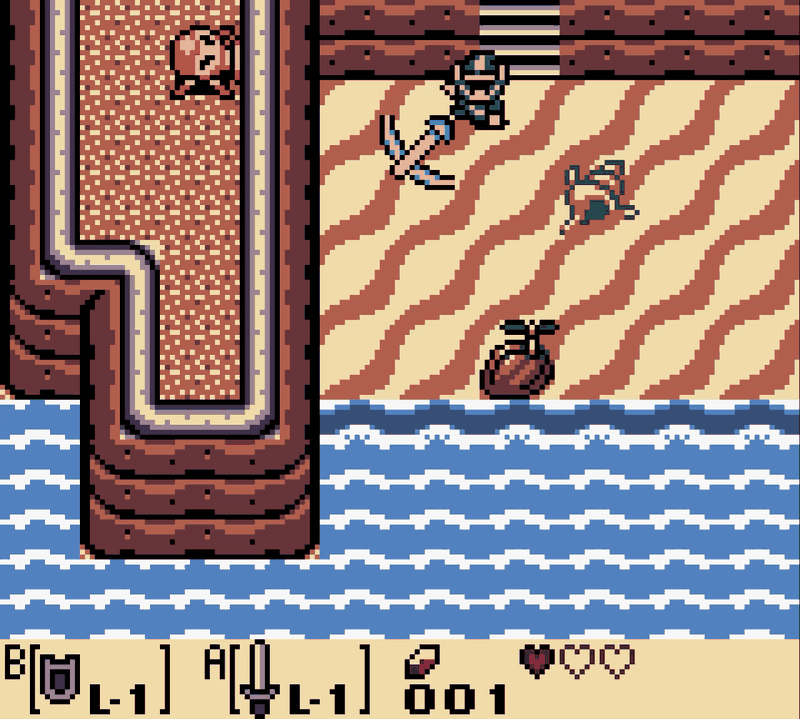
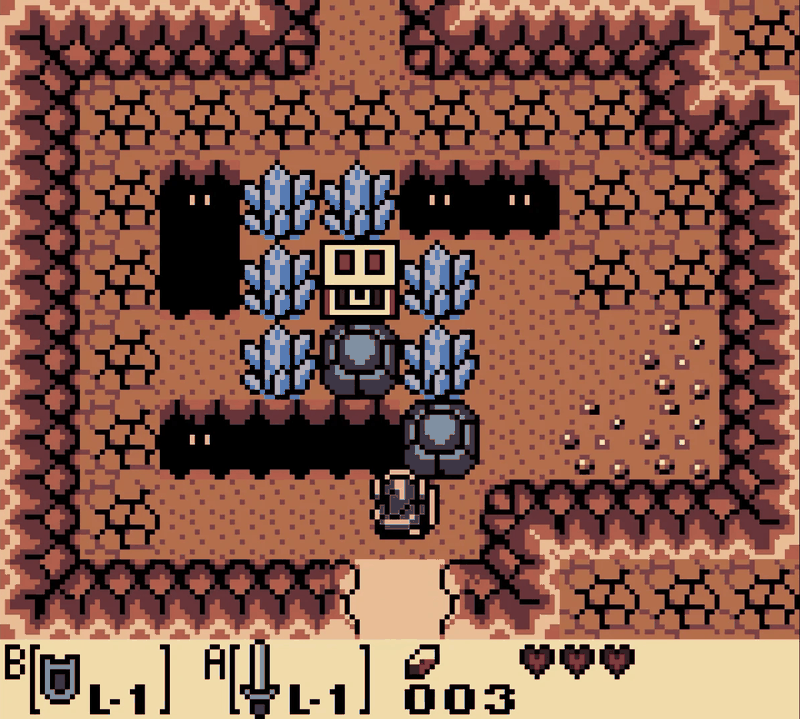
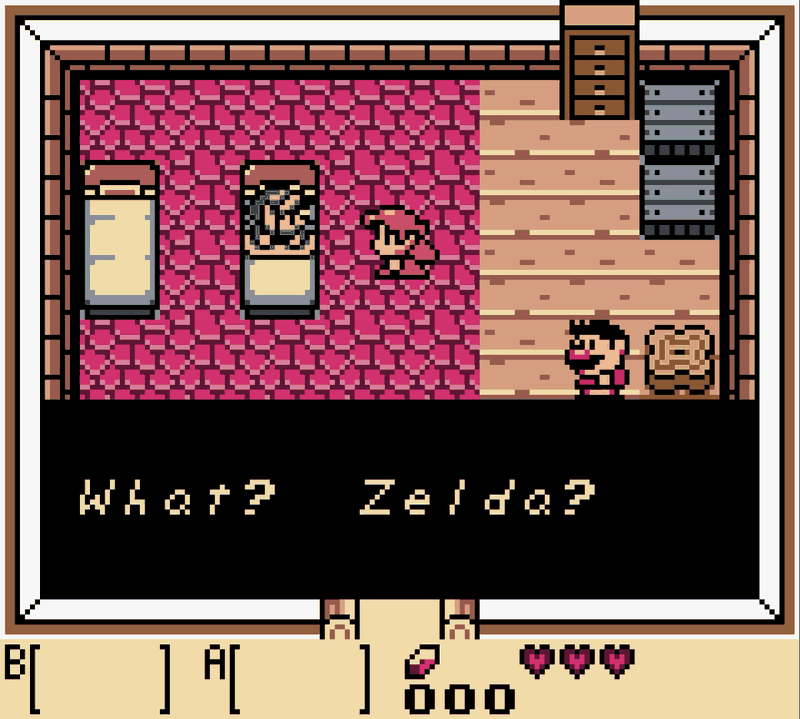
What sets it apart is the tone. The Nintendo references scuttle about all over the place — there's a soft toy Yoshi that kicks off the trading quest, a grave for the Flying Rooster, a raccoon in the woods explaining that as a raccoon his nose is very sensitive to stuff like dust and powder, a dog owner boasting about her BowWow's fine fur coat. Goombas and Piranha Plants turn up where they've no business being. It's a strange, unique game in that respect, and I love it for that.
Fair warning about the gameplay footage in the video: it did not go well. I recorded on an emulator with a PlayStation 4 controller and spent a good chunk of the segment pressing the wrong button, which is a classic case of forgetting what the buttons do. The classic Zelda cave with the gaps you mustn't fall down turned out to be surprisingly difficult when you can't remember which button jumps. There are no extra lives here — every fall costs you health, and when you're out, you're out. Watch it if you fancy some schadenfreude. It's not a great advert for my reflexes, but it is an honest one.
It's also a game that's very hard to do justice in ten or fifteen minutes. You need hours and hours with it. That's a limitation of the format, not of the game.
The verdict
I'll be upfront: I've only put a couple of hours in, so this isn't the judgement of someone who's finished it. But between what I've played, what I've seen and what I've read, this is very, very borderline. It feels like Zelda. It's got that wonderful soundtrack. It looks fantastic on the Game Boy Color. It's almost gaming perfection, and if you're a Zelda fan who's somehow missed it, it's a must-play. I'm going straight back to it, because there's a lot more I want to do with it.
Between them, the original and DX shifted around six million copies. On a machine everybody spent the nineties calling underpowered.
Coming up
I thought about covering Tetris here, but it deserves a feature of its own, so I'll come back to that separately. Next up is the legacy of Gunpei Yokoi — the man behind so many of Nintendo's innovations, not least the D-pad, and a hugely significant figure in the development of the Game Boy itself.