I went back to the original LittleBigPlanet on PlayStation 3 this week expecting to find the cracks. Eighteen years is a long time, and a fair bit of what I loved in that era hasn't survived being played again in 2026 — the controls go stiff, the charm curdles, and the clever idea turns out to have been the only idea.
So this is me working out whether LittleBigPlanet actually holds up, or whether I've been carrying a fond memory around and calling it a classic.
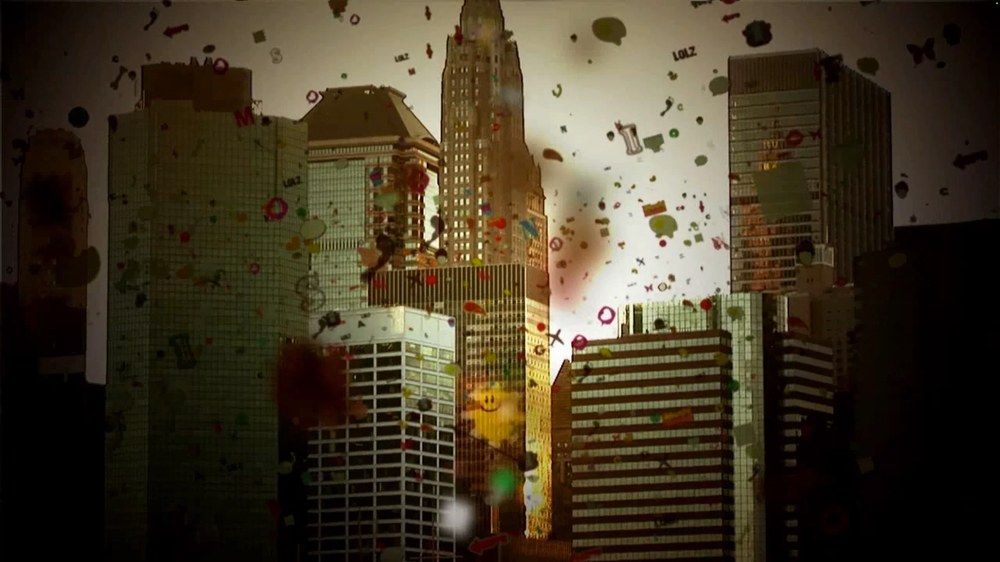
A tiny knitted man who ended up defining a console
You play as a little knitted man running around a world made of cardboard, felt and bits of string. For some strange reason, in 2008, this became one of the games that really helped define the PlayStation 3, and Sackboy became something of an unofficial mascot. It came from Media Molecule — another British studio, as it happens, after I covered MotorStorm last week — and it arrived with a wonderfully simple premise: play, create, share.
You could simply play it as a platformer, and it was a really good one. Sackboy runs, jumps, grabs things, and occasionally gets flung across the screen by some wildly unsafe homemade contraption. But that wasn't the point. The clever bit was that LittleBigPlanet handed you essentially the same tools the developers had used to build the game and said, right, your turn. Build levels, machines, puzzles, decorate the lot, then upload it for other people to play.
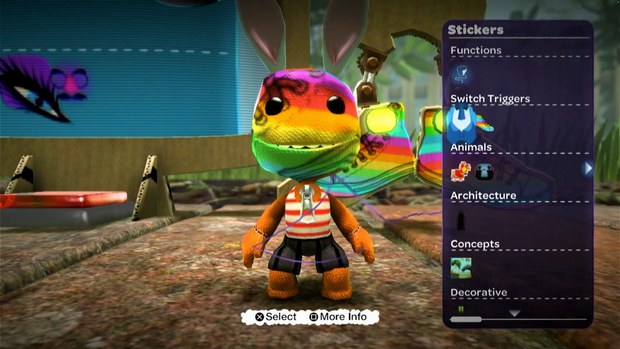
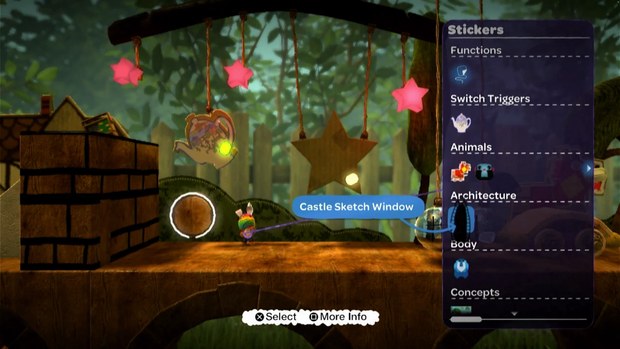
People went mad with it. There were a million published levels within nine months, and by the time the lights went out the franchise had passed ten million. They ranged from genuinely brilliant platform games to bizarre experiments, recreations of other games, and inevitably enormous machines designed purely to launch Sackboy into a wall.
It had something a lot of games from this period didn't seem to have at all: personality, by the boatload.
The share part is gone, and you should know that going in
That's the one caveat on all this, and it's worth being straight about it in a 2026 review. After the servers were attacked in May 2021, Sony took the whole lot down, and in September that year announced that the PS3 and Vita servers were staying off permanently. So on a PS3 today, "play, create, share" is really play and create. The story levels are all there, local co-op is all there, the creation tools are all there — you just can't upload anything or pull down anybody else's work any more. The ten million community levels survive, but they live on the PS4 version of LittleBigPlanet 3.
It doesn't change the game in the box, which is what I'm scoring. But if you go in expecting to browse a decade of other people's madness on original hardware, you'll be disappointed, and better you hear it from me than from the machine.
Stephen Fry, and a piece of music you'll know
We got Stephen Fry narrating the whole thing, which somehow made playing with virtual cardboard feel considerably more sophisticated than it really was. Getting him involved was an absolute master stroke, and he's stayed with the series ever since — he's narrated every game in it.
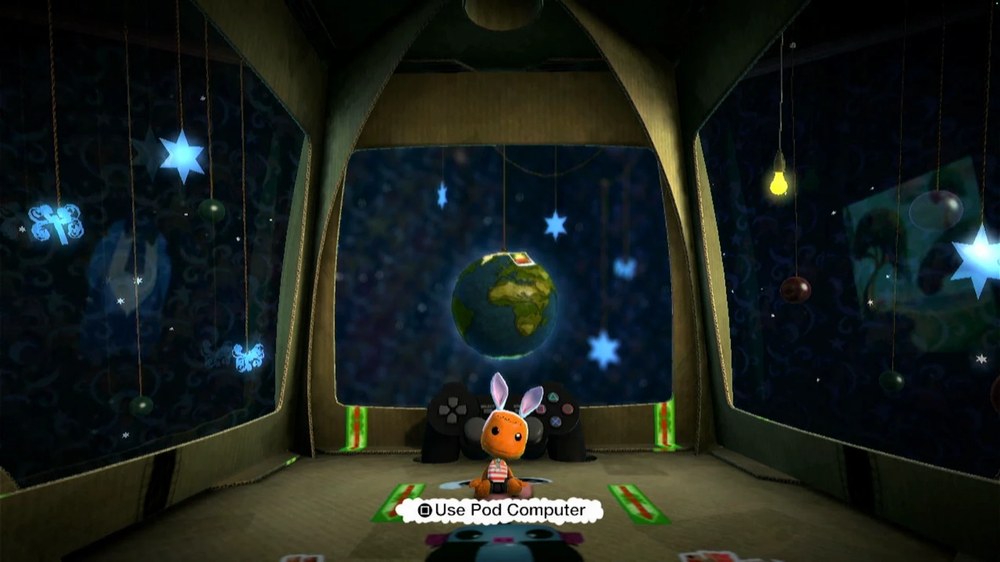
There's another lovely touch I only clocked playing it back. The music over the introduction is a piece anyone who grew up in the UK will recognise instantly: "Left Bank Two" by the Noveltones, the Gallery music from Vision On and the early series of Take Hart — the bit where Tony Hart showed off the pictures people had sent in.
I was convinced that had to be deliberate. It isn't, quite. Media Molecule have said they licensed the track before they knew what they wanted to do with it, and only afterwards did it end up playing over an intro level that is itself a sort of gallery — of the developers' own faces. They call it serendipity, and honestly that's a better story than a knowing nod would have been.
What the series became
This little PS3 game ended up a sizeable franchise. A PSP version followed in 2009. LittleBigPlanet 2 arrived on PS3 in 2011 and expanded the creation tools so far that Sony stopped marketing it as a platform game and started calling it "a platform for games". Clever. (I now own two copies of LBP2, because I forgot I already had one.) Then the PS Vita version in 2012, making use of the touchscreen and rear touchpad, and in the same year the slightly unexpected LittleBigPlanet Karting, because apparently every successful gaming mascot is eventually legally required to drive a go-kart.
LittleBigPlanet 3 followed in 2014 on PS3 and PS4, this time led by Sumo Digital with Media Molecule and XDev, adding OddSock, Toggle and Swoop alongside Sackboy. There was also a mobile endless runner, Run Sackboy! Run!, which I never played. And eventually Sackboy: A Big Adventure in 2020, a much more traditional 3D platformer that dropped the creation mode altogether. I played that for the first time only the other week, on a PS4 at Play Expo in Blackpool. Best way I can describe it: it felt a bit like Skylanders.
The small stuff is where it wins
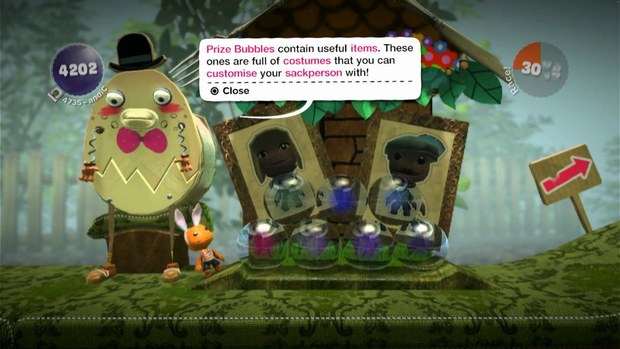
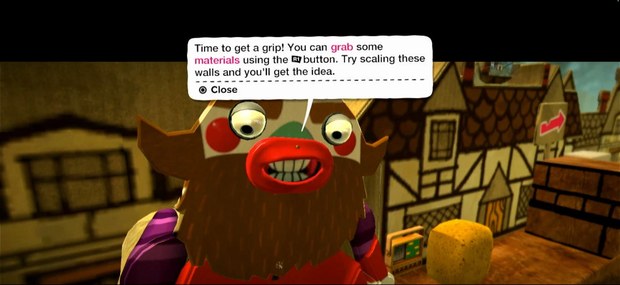
Go back to the first one and it's the detail that gets you. You can pull faces with the D-pad — sad, sadder, really sad, angry, very angry, absolutely incensed, scared, terrified, happy, ecstatic with his tongue out. Waggle the sticks and Sackboy waves his arms around. Tilt the controller and he leans; nod his head with the motion controls. You can slap stickers on the scenery, and apparently on your own face, which I'd completely forgotten was a thing. Big prize bubbles hand you costumes and outfits. There's even PlayStation Eye support for dropping your own photographs in, which I'd forgotten about too — though it's a bit pointless without the camera plugged in.
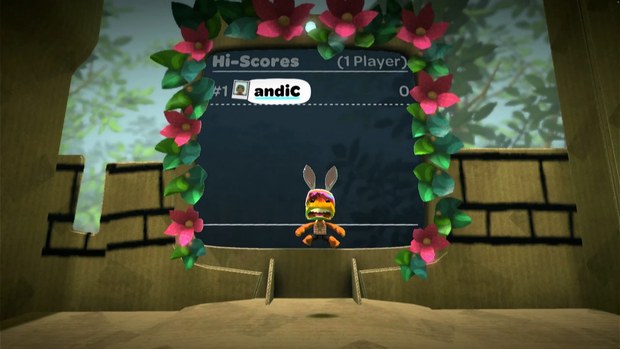
And although it's a platformer, there's depth to it: you move between three layers of scenery, forwards and backwards, which gives it a real sense of space while staying essentially 2D. It's a lovely trick, and it's the thing most of the imitators never got right.
Why it hasn't aged
This is a game that really leans into the high-definition era just getting going. It's tactile — you feel like you could reach in and touch the pieces. It's cute, the controls and puzzles are intuitive, there's loads to collect, and as a pure platformer, before you even get near the creation tools, it's excellent. For me it epitomises the start of HD gaming: taking a relatively old 8-bit, 16-bit concept and bringing it into the modern era.
Nothing about it is frustrating. The puzzles do get harder later on, but only in the way any good puzzle is hard — it eases you in gently and ramps the difficulty up kindly. The critics at the time were not hedging either: it landed on 95 on Metacritic, which is rarefied company, and they praised exactly the things I've just spent a page on — the visual style, the charm, the co-op, the level design.
And remember what it's running on. The PlayStation 3 is coming up on twenty years old, and this still looks superb. It's for adults and children alike, and you'd need a heart of stone for it not to make you smile. Play it, and play LittleBigPlanet 2 after it.
Coming up
Friday it's the PlayStation 3 launch — a rocky start, and a console that very nearly got beaten by the Xbox 360.