Here's the short version: yes, Mega CD collecting can get properly expensive — but the expensive part is mostly the hardware and a handful of famous games. Once you've swallowed the cost of the machine, there's a surprisingly varied little collection to be had for less than the price of one copy of Snatcher. Mine has come together slowly — I've been hunting for reasonably priced games for a while now, and added a few more this month — and none of it has involved selling a kidney, remortgaging the house, or explaining to my wife why there's suddenly several hundred pounds missing from the joint account.
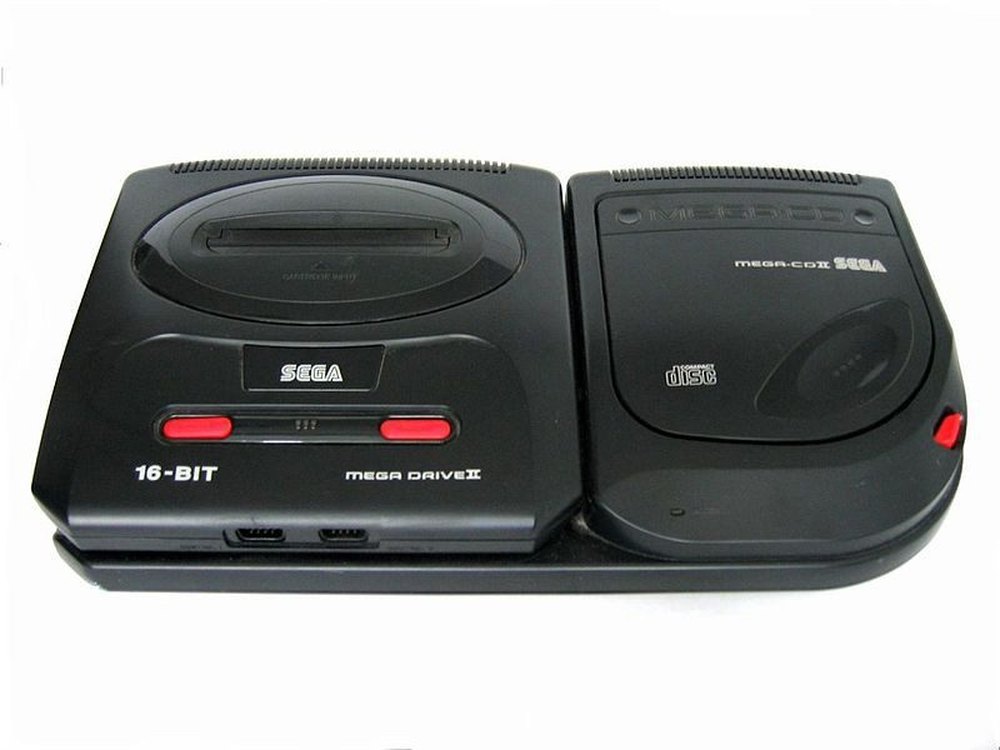
The hardware is the real hurdle
Unlike something like a PlayStation 2, where tens of millions were sold and millions are still lurking in lofts and cupboards, the Mega CD was never common. Only a few million units of the Mega CD and Sega CD went out worldwide, against tens of millions of Mega Drives. So the surviving pool is small to start with — and then there's the fact that these things are now more than thirty years old, with ageing CD drives, belts, lasers, capacitors, the lot.
That's the other problem with CD hardware: moving parts. A Mega CD cartridge can spend thirty years being abused in someone's loft, get blown into with the force of a category five hurricane, and still boot. A thirty-year-old CD drive can occasionally decide it's had enough of this world because you looked at it a bit funny.
I paid around £200 for my setup — an unboxed Mega CD 2 and a Mega Drive 2, plus all the bits and cables to get it running. That's roughly $270 at current exchange rates, though the North American market is very much its own thing. And honestly, £200 for the complete setup felt reasonable. Reasonable in the peculiar world of retro, I mean, where spending 200 quid on thirty-year-old electronics and then being delighted that it works counts as a victory.
Remember too that a Mega CD isn't really one console. It's a Mega Drive bolted to another machine with another power supply and another set of cables. Go down the Mega CD, Mega Drive and 32X route and your next purchase is presumably an extension lead and a small fire extinguisher. The first step in collecting Mega CD is accepting that the area underneath your telly is no longer legally part of your house. It belongs to Sega now.
Why the famous games cost silly money
Search for the "best" Mega CD games and you'll run into Snatcher, Keio Flying Squadron, Final Fight, Terminator, Shining Force CD and Sonic CD. Some of those command serious money. Snatcher is the obvious lunatic example — a complete copy comfortably runs into several hundred pounds, with the nicest examples heading towards £700 or around $1,000 for one game.
For that kind of money I don't just want the game. I want Hideo Kojima to come round to my house and play it with me, and I want him to bring snacks.
The reasons are straightforward: the Mega CD didn't sell well, so fewer games were made in the first place; a lot of the now-desirable titles weren't big sellers at the time; and there's a finite supply being chased by collectors. Then there's the packaging. Those enormous plastic cases look like they'd survive a nuclear explosion but are about as fragile as a rich tea biscuit. Cases crack, hinges break, manuals wander off, discs get scratched. Genuinely pristine complete copies are very hard to find.
Six games that won't ruin you
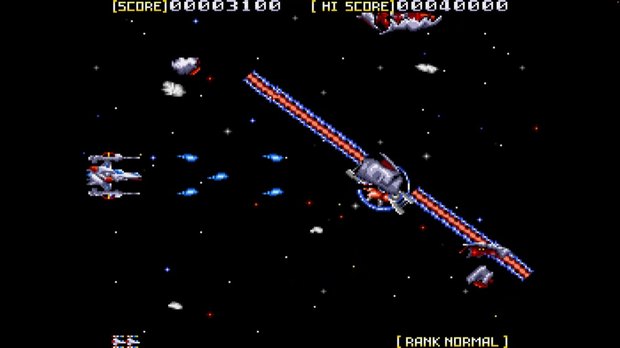
Sol-Feace — bundled with Cobra Command in Europe, so there are plenty about. The PAL double pack goes for £10–20 if you shop around; in North America the games were sold separately and Sol-Feace sits at roughly $20–30 complete. It's a traditional side-scrolling shooter — R-Type on steroids — with the CD helping on audio and presentation. Not a reason to spend £200 on a console, but for 15 quid it's a very good thing to actually play once you have one. Cheap doesn't mean bad; sometimes it just means there are enough copies to go round.
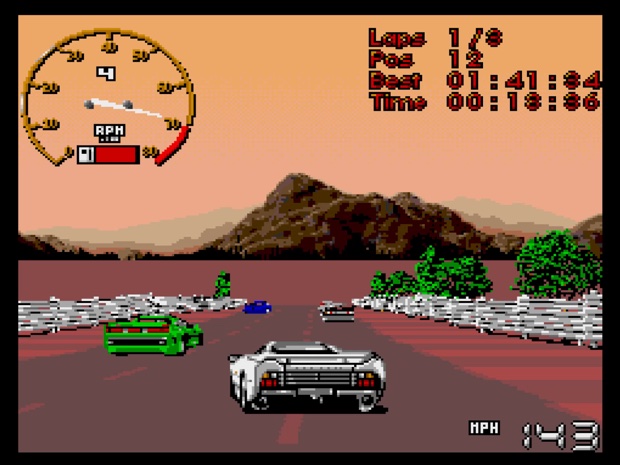
Jaguar XJ220 — real Lotus Turbo Challenge vibes, and no wonder: it's a Core Design racer that started on the Amiga in 1992 before arriving here a year later with better presentation and audio. UK: £20–30 complete if you're patient. North America: closer to $50–65. It's still the cheapest way to own something with the words Jaguar XJ220 on it — one of them has a twin-turbo V6 and costs hundreds of thousands, the other comes in a brittle plastic box, and I'd compromise. It also proves something the Mega CD sometimes forgot: you didn't have to reinvent video games just because you had a CD drive. You could take a decent game and make it look and sound much better.
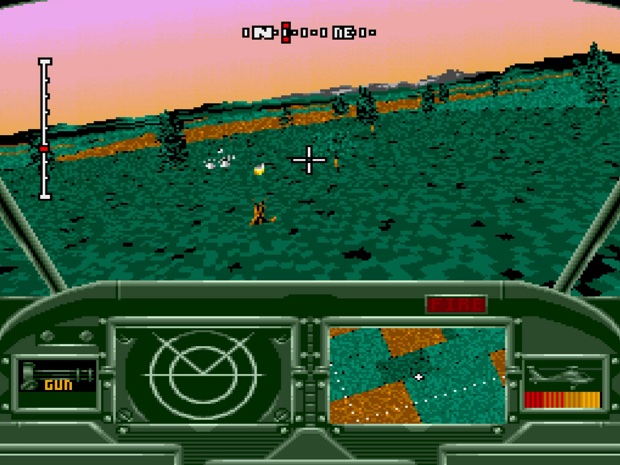
Thunderhawk — AH-3 Thunderstrike in the States, because apparently even the name needed localising. £10–20 in the UK, $20–25 stateside, so nobody's being punished here. A combat helicopter simulation with scaling effects, speech and far more elaborate presentation than a cartridge game — exactly the sort of thing where CD-ROM makes sense, because the immersion genuinely benefits from the audio and the extra storage. It's Core Design again, and again an Amiga game first.
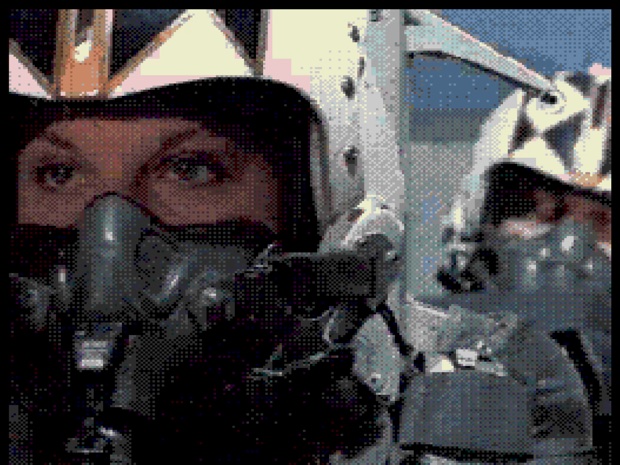
Tomcat Alley — how could I not? PAL copies are £15–25; the North American version is extremely common and can be had for as little as $10, up to about $20 complete. This is proper Mega CD territory: full motion video, real actors, military footage and a lot of people staring intensely at monitors. It was, in fact, the first Sega CD game to run extensive full-screen video, which explains both the ambition and the picture quality. Imagine Top Gun accidentally recorded onto a video CD at the lowest possible quality setting. Has it aged gracefully? No. But this was the promise — interactive cinema squeezed through hardware that occasionally made identifying the person speaking feel like one of those captcha things where you have to spot the pushbikes. If you're buying a Mega CD in 2026 you should own at least one FMV game. It's part of the experience.
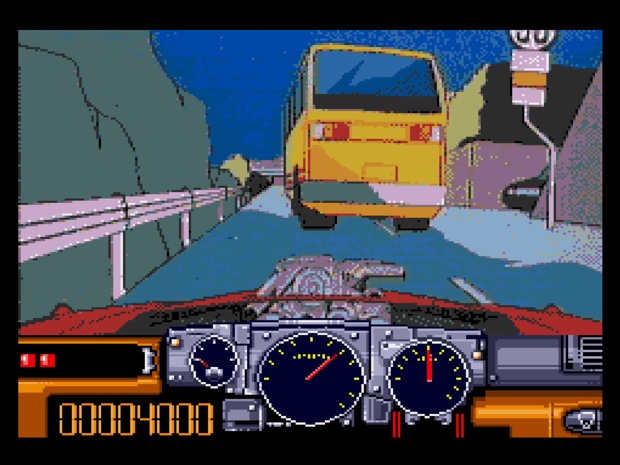
Road Avenger — the best example of why you can't just convert pounds to dollars. In the UK, a complete PAL copy is £10–20. In North America, $75–100. Somewhere over the Atlantic this one went through passport control and came out the other side as a collector's item. Where it's cheap, it's one of the best things you can buy, and there's a good reason it looks better than its FMV stablemates: it's Wolf Team's conversion of Road Blaster, Data East's 1985 LaserDisc arcade game, so what you're watching is proper hand-drawn animation rather than compressed footage of actual human beings. Animation survives that squeeze far more gracefully. It's an interactive anime car chase: you watch, you respond to prompts, you steer, brake, accelerate and hammer the turbo. Nobody's discussing its emergent gameplay systems at GDC, but it's fast, ridiculous and entertaining. At 15 quid, compelling. At $100, watch some gameplay first.
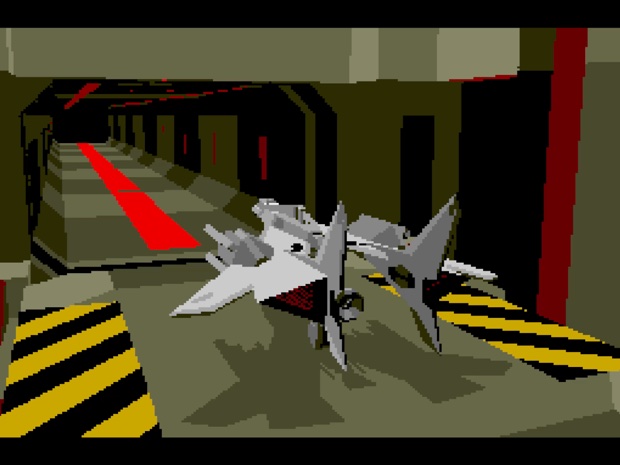
Silpheed — reasonable on both sides: around £20–30 for a complete PAL copy, $30–40 in the States. This is my favourite example here, because it makes the machine feel like genuinely exotic early-90s kit. Huge 3D environments fly underneath you while ships and explosions fill the screen — except those backgrounds aren't real-time polygons, they're pre-rendered sequences streamed from the disc with the interactive bits sitting over the top. Some would call that cheating. I'd call it using what you've got. It's the Ford Sierra trick from last week's feature: you can't fit the jet engine, so you put a video of one behind it and drive very fast. Crucially, there's still a proper game on top, and that really helps.
The Sonic CD problem
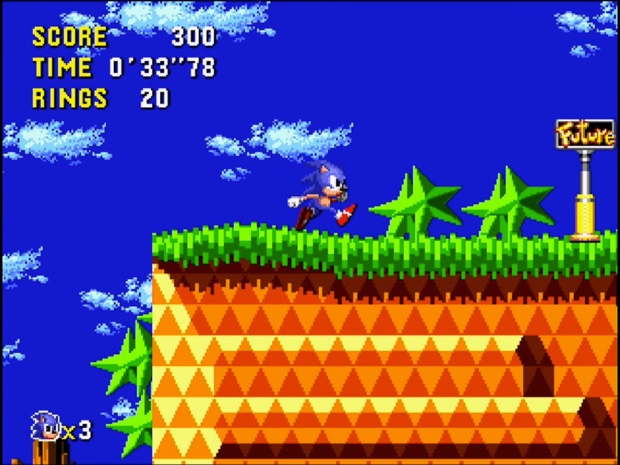
An original complete copy isn't cheap, and in North America especially it can push towards $100 or more. Don't bother, unless you specifically want it on the shelf. Sonic Origins includes an excellent modern version alongside Sonic 1, 2 and 3 & Knuckles, and regularly costs less than an original copy of Sonic CD on its own. That's how I've been playing it this month — which does create the slightly ridiculous situation of spending £200 on original Sega hardware and then recommending you play its most famous game on a Nintendo Switch. Welcome to retro collecting.
The maths
In the UK: Sol-Feace/Cobra Command £10–20, Jaguar XJ220 £20–30, Thunderhawk £10–20, Tomcat Alley £15–25, Road Avenger £10–20, Silpheed £20–30. Call it about £80 if you're patient, up to around £160 if you're not, for six games — or six curiosities — that between them cover shooters, racing, simulation, live-action FMV, animated FMV, a lot of technical trickery, and enough CD audio to make you wonder why we ever thought beeps were acceptable.
In America the story shifts: Sol-Feace, Thunderstrike, Tomcat Alley and Silpheed stay cheap, Jaguar XJ220 costs noticeably more, and Road Avenger has apparently decided it would quite like to be Snatcher when it grows up. Don't treat PAL prices as a simple currency conversion — supply, packaging and regional releases all differ, and sometimes a £15 game here really is a $100 game there. I'm a guy from the UK talking about thirty-year-old Sega games, not the Federal Reserve.
Are these the greatest Mega CD games ever released? No. There's no Snatcher, no Keio, no Shining Force CD. That's rather the point. Retro gaming shouldn't mean spending $1,000 on one game because somebody on YouTube stuck it in an S tier — and it wasn't me, I'd add. Stay away from Snatcher and for the price of that one game you could buy all of these, another Mega CD, another Mega Drive, a TV, and still have change for the industrial extension lead required to plug the lot in.
If you've got other cheap entry-level recommendations, I'd genuinely like to hear them — I'm still looking to expand my own collection.
Prices are what I've seen on the secondhand market around September 2026. They move, and they move differently either side of the Atlantic — treat them as a rough guide rather than a valuation.