Four weeks of living with this little grey box, and here's where I've landed: if you had a Game Boy back in the day, go back to it. If you've never touched one, honestly? Don't bother.
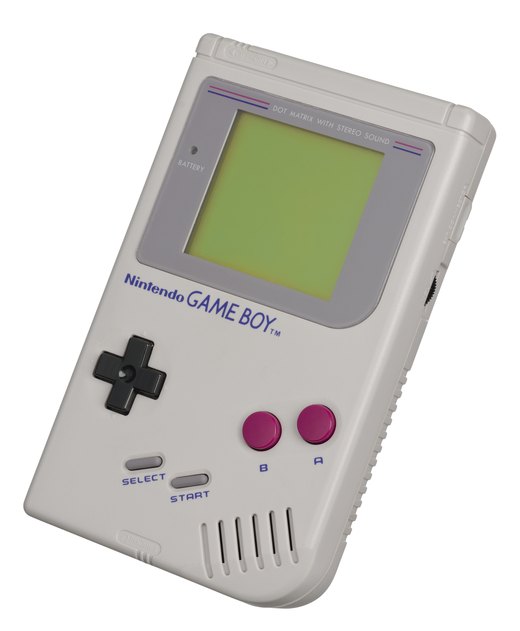
That's not me being snobbish about newcomers. It's just that the games make the console — something I always say and somehow forgot to say this time — and the games that make the Game Boy make it largely through memory. Super Mario Land holds a huge amount of nostalgia for me. Strip that away and I think a lot of people would look at the library and say it all looks a bit rubbish. I couldn't get my kids interested in it at all, and they've taken to other consoles I've had in the house. I suspect that's because the Game Boy was already old technology when it launched, so it's aged a bit worse than some of its contemporaries.
And playing on the real hardware has its limitations. We're spoilt now. I've got the ROG Ally, the PSP, the Vita, the Switch — big bright backlit screens, proper control schemes, full-blown computers in your hands. Then you pick up a dull grey brick from 35-odd years ago, and you're squinting, and you can't play it in low light. It is genuinely difficult.
All of that said: what a machine. Getting into the history this month has been fascinating, and it's an incredibly important part of gaming history.
Why the weakest handheld won
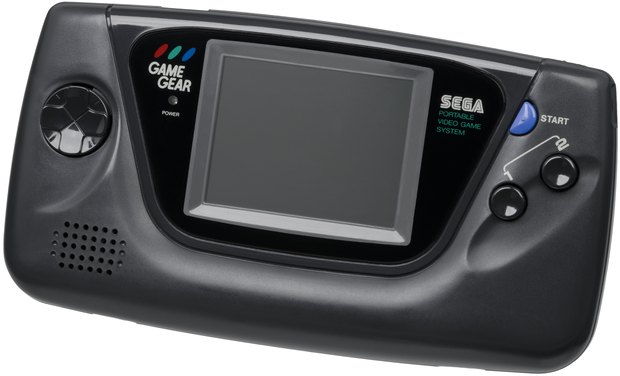
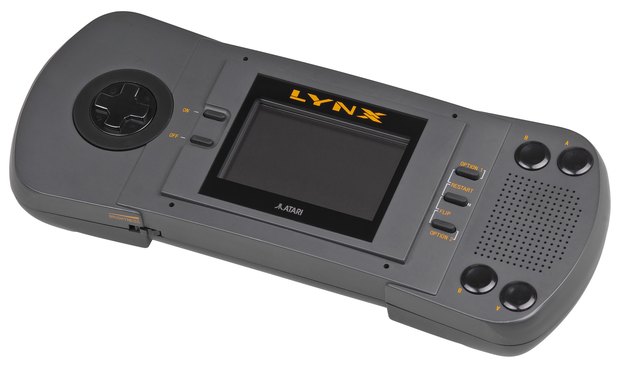
Nintendo released the Game Boy in Japan on 21 April 1989. Monochrome screen, modest 8-bit processor, no backlight — and within a year or so it was up against Atari's Lynx and Sega's Game Gear, both in full colour. It didn't just beat them. It absolutely destroyed them.
That comes straight back to Gunpei Yokoi and his philosophy of lateral thinking with withered technology: take mature, cheap, well-understood parts and find clever new uses for them. Working with Satoru Okada and Nintendo R&D1, the priorities weren't the spec sheet. Small enough to carry. Affordable. Excellent battery life. Durable enough to survive being chucked in a bag.

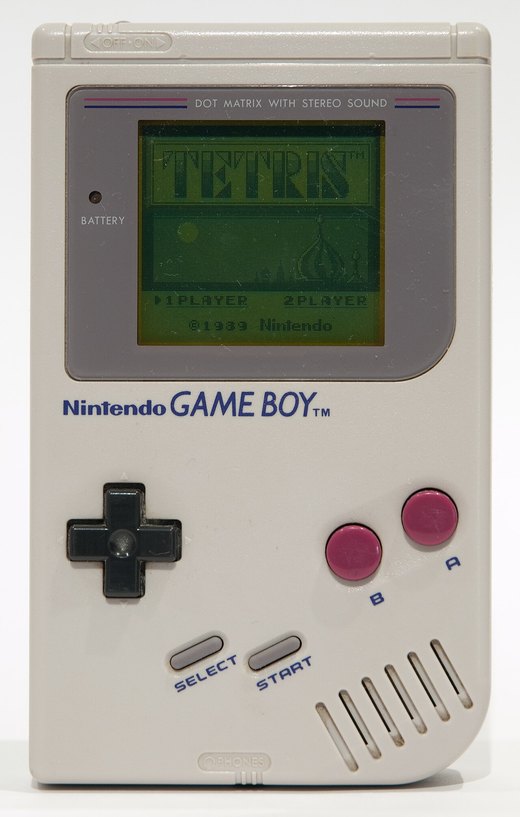
Then there's Tetris. Nintendo of America initially considered bundling Super Mario Land — and I love Super Mario Land — but Tetris was the far smarter call. Mario appealed to people who already liked video games. Tetris appealed to everybody: kids, parents, aunties, uncles, grandparents, people who'd never considered buying a console. Add the link cable and two people could play each other. Nintendo wasn't selling a portable NES any more.
The initial 300,000 units in Japan sold out in about two weeks, and Nintendo reportedly shifted around a million in the US within weeks of launch.
Across the Game Boy, Pocket, Light and Colour family, roughly 118.7 million units. The Game Gear managed about 10.6 million; the Lynx somewhere around two to three million, depending whose figures you trust. And the lifespan is extraordinary — 1989 to the Game Boy Advance in 2001, twelve years, spanning multiple console generations, in an industry obsessed with replacing hardware.
The spec sheet doesn't tell the story
Look at the numbers and it's closer than you'd expect. The Game Boy's Sharp LR35902 ran at 4.19MHz — faster on paper than the Game Gear's Z80 at 3.58MHz and the Lynx's 65SC02 at 4MHz. All 8-bit, though the Lynx had custom 16-bit graphics hardware. RAM is where it starts to separate: 8K in both the Game Boy and Game Gear, but 64K in the Lynx, which would have been a big deal for performance.
The screen is the real gap. 2.6 inches, 160×144, four shades, 40 sprites. The Game Gear gave you 3.2 inches at the same resolution with 32 colours on screen from a 4,096 palette; the Lynx a 3.5-inch backlit panel at 160×102.
And then you turn to batteries and weight, and the whole thing flips. Four AAs in the Game Boy gets you somewhere between 15 and 30 hours. The Game Gear needed six AAs for three to five hours — woeful, and expensive to run. The Lynx, also six AA batteries, four to five hours. The Game Boy weighed 220g without batteries against the Game Gear's frankly humungous 400g.
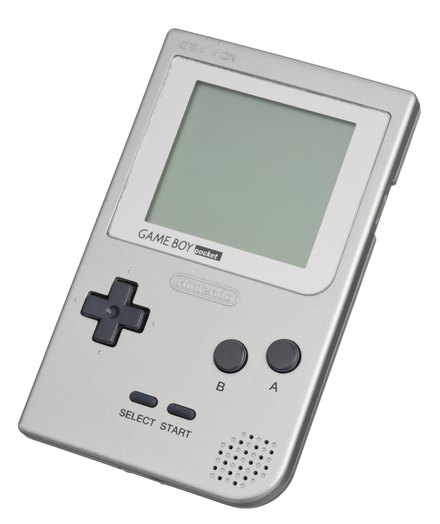
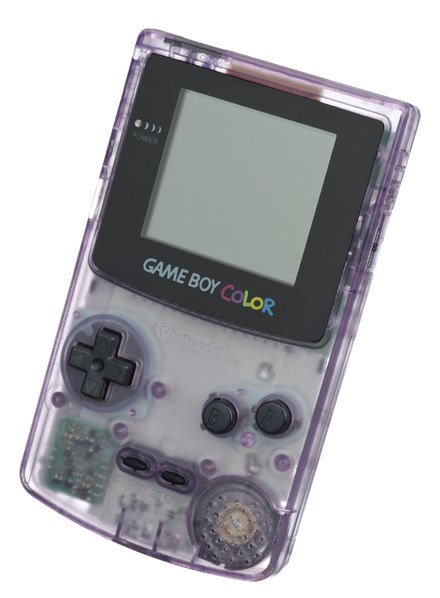
The Game Boy Colour is the pick of the family for me on paper: a doubled 8.39MHz clock, 32K of RAM, 32,768 colours with 56 on screen, 138g, and just two AAs for at least ten hours. I've had the same batteries in mine all month, played it constantly, and haven't changed them once. Its 2.3-inch screen is the smallest of the lot, mind.
What I've been playing
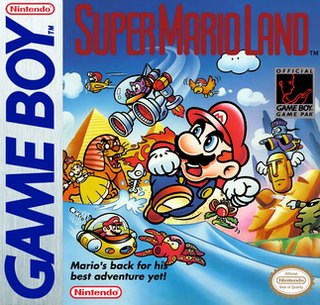
Mostly on the Colour, because it plays everything. Super Mario Land remains one of my favourite Mario games of all time and one of the few I'm actually decent at — Super Mario Land 2 does it better technically, and I still prefer the original. I played a fair bit of Super Mario Land 3, which is really the first Wario Land, probably more than 2 in fact.
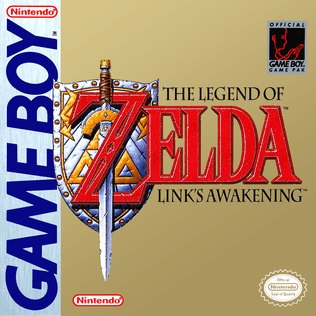
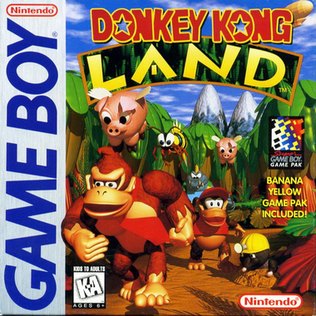
Link's Awakening DX I'd never played before, and I picked up a lovely boxed copy with the manual — thoroughly enjoyed it, and the Colour version brings a lot more vibrancy. Donkey Kong Land is astonishing for what Rare squeezed onto that cartridge; there's Donkey Kong Land 2 and the Colour version of Donkey Kong Country too.
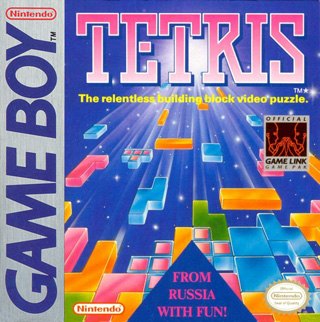
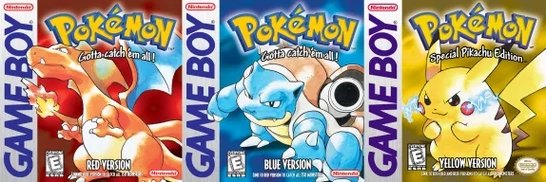
My Tetris cart is the Japanese version, bought cheap because the shop had a pile of them — it's all in English, plays identically. For my money it's still the best version of Tetris there is. I also tried Tetris DX, which is practically the same game, though I couldn't spot the music. And I played Pokémon Red as a complete Pokémon novice, trying to understand why that franchise has held its position for so long.
Elsewhere: Micro Machines, just as frustrating and ridiculous on the Game Boy as on every other platform of the era, and a bit of Harry Potter and the Philosopher's Stone.
Getting into it yourself
The original, the Pocket and the Colour are all incredibly reliable machines. Watch for oxidisation on the battery contacts — if you're buying at a fair, get them to demonstrate it powered on, check the audio and check a cartridge loads. My original Game Boy has an audio fault: headphones fine, speaker dead. Scratched front lenses are replaceable and it's not a hard job; there are plenty of guides online.
I'd steer you to the Game Boy Colour. It plays everything, it's lighter, two batteries, and you can find them for around £70–£80 if you shop about, more if you want it boxed. The other route is a Game Boy Advance — the original purple ones are probably the cheapest way in — or the SP, which gets you a backlit screen for roughly what a Game Boy costs.
Emulation-wise, LaunchBox or OpenEmu on the Mac both work well, and if you've got a Switch and a Nintendo online subscription the Game Boy library on there is excellent and covers nearly everything I've played this month. I've also been using a GPi Case by Retroflag — a Raspberry Pi Zero W slotted into a cartridge that goes into a Game Boy-shaped shell. RecalBox runs better on it than RetroPie, and it handles 8- and 16-bit systems happily. I've got RetroPie on a Pi 4 in an NES case too. How you source games is entirely your call — I only ever film games I own, not to take the moral high ground, just to keep the channel above board.
Next: the Mega CD
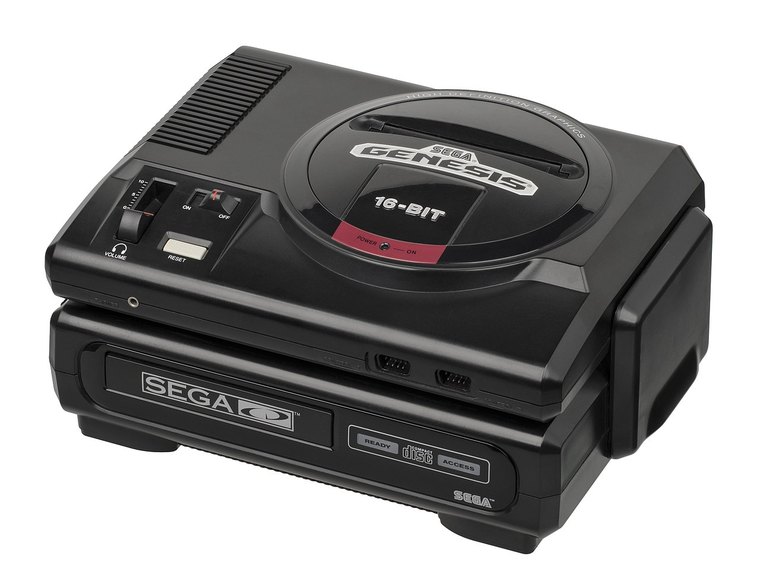
September's month-with is a gamble. It's the Sega CD, or Mega CD as we know it here, attached to a Model 2 Mega Drive — apparently the more reliable, less temperamental pairing. It flopped. I think I played one maybe once or twice back in the day, I've owned this for over a year, and I barely have any games for it because they're genuinely hard to find. So don't expect a BIT Between every week.
I'm sceptical. I've not seen great games for it yet. If you've got recommendations — ideally not wildly expensive ones — put them in the comments. We've gone from one of the most successful consoles ever made to one of the best-known commercial failures. Nothing to lose.