Some games are remembered because they were huge. Some pushed graphics, or built enormous worlds, or ate hundreds of hours of your life. And then there's Portal, which is almost the exact opposite of all of that — short, small, and originally tucked away inside the Orange Box alongside Half-Life 2, the Half-Life 2 episodes and Team Fortress 2. A bonus game, basically. And somehow this weird little first-person puzzler became one of the most memorable games of its generation.
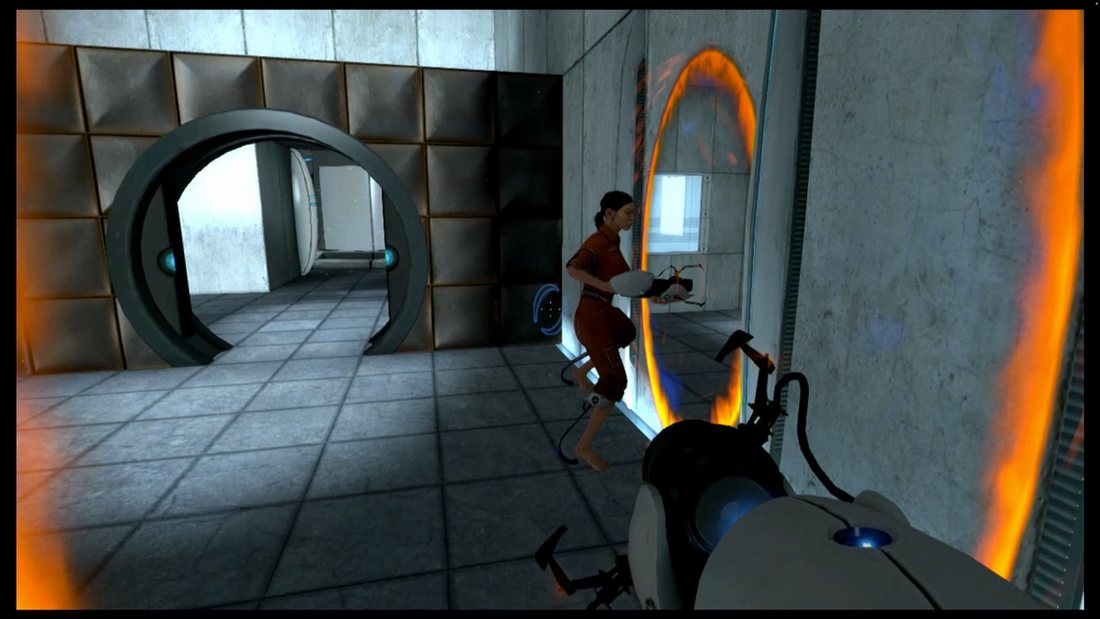
I've just played through it again with my son, and then went straight on through Portal 2. If I have a complaint — and it really is the only one — it's that there simply isn't enough of it. Which is a slightly unfair thing to level at a game that was thrown in as an extra, but there it is.
There's a lovely bit of history behind that "extra", too. Portal didn't start at Valve at all. It grew out of Narbacular Drop, a free student project from a team at the DigiPen Institute of Technology, built around exactly this idea of two linked portals. Valve saw it at a careers day, invited the team in to present — with Gabe Newell quietly sitting in the audience — and hired the lot of them on the spot to rebuild it properly. Valve then bundled the result into the Orange Box partly because they weren't sure it would sell on its own.
A simple idea, played out properly and then stopped
The premise is dead simple. You get a portal gun, it creates two connected openings, you walk in one and come out of the other. That's it. Then the game starts asking you to think about momentum and gravity and space in ways games really hadn't done before, and it all gets very trippy — springboards, dropping through portals to accelerate yourself, that sort of thing. It genuinely starts to mess with your head after a while.
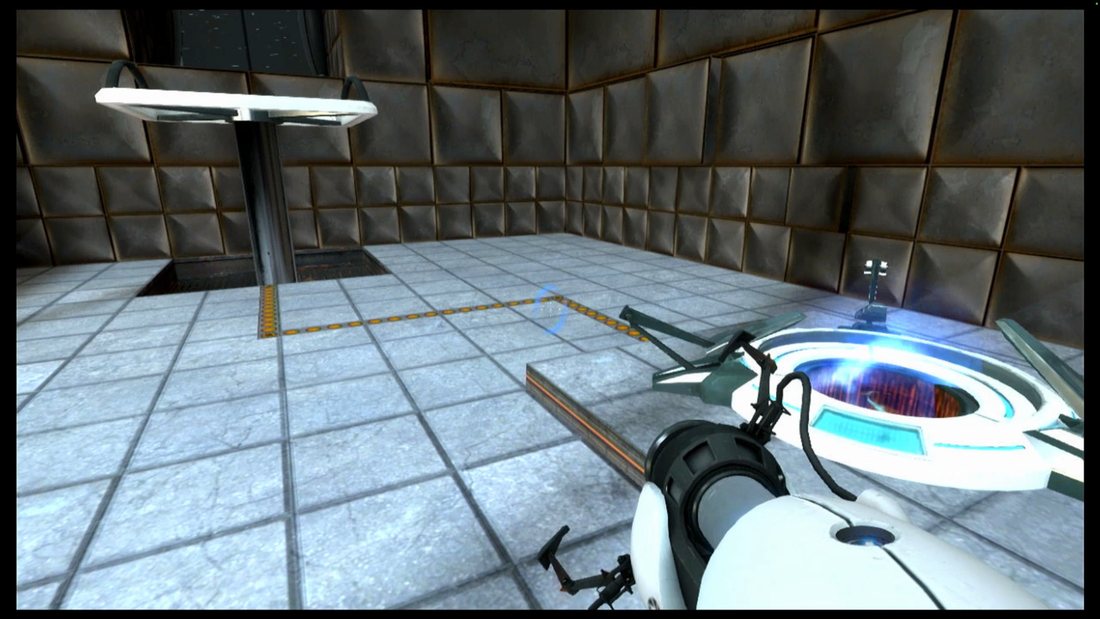
What I love about it is that it doesn't waste your time. It introduces the idea, teaches you how it works, plays with it, turns it on its head, and then finishes before the concept gets old. The early test chambers are almost embarrassingly easy — put a portal there, walk through, drop a cube on a button — but that's how it hooks you. It ratchets the difficulty up ever so slightly each time, then starts to accelerate. By the time you're into the late teens of the nineteen chambers, the rooms are bigger, there's more to do, and the puzzles take proper thinking.
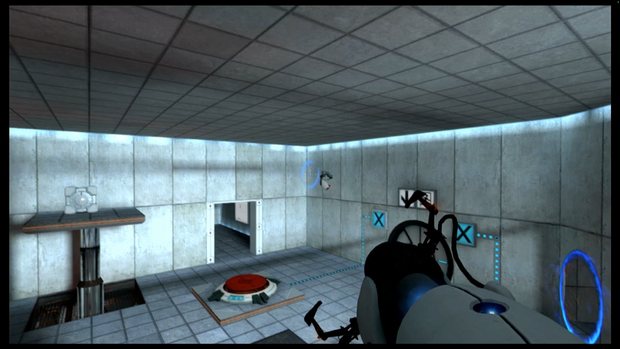
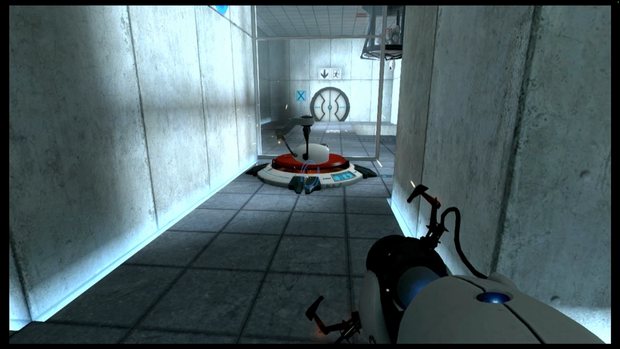
It's also generous with you. You're not limited on lives — land in the goo and it simply restarts the chamber, and there are checkpoints as you solve things, so you're not redoing half an hour of work. Even the boss at the end isn't that hard once you know what you're doing. It's a beautifully balanced game that never punishes you.
The bit people actually quote
The puzzles are only half of it. You're being tested inside the Aperture Science labs under the watchful eye of GLaDOS, an increasingly suspicious AI, and what starts as a sterile puzzle game gradually reveals something much darker — and really quite funny. The dry humour is unmistakably Valve; you get flashes of the same thing in Half-Life. The companion cube, the turrets, the cake, Still Alive — the game became endlessly quotable, and I'm not going to say much more than that because spoiling it would be a crime.
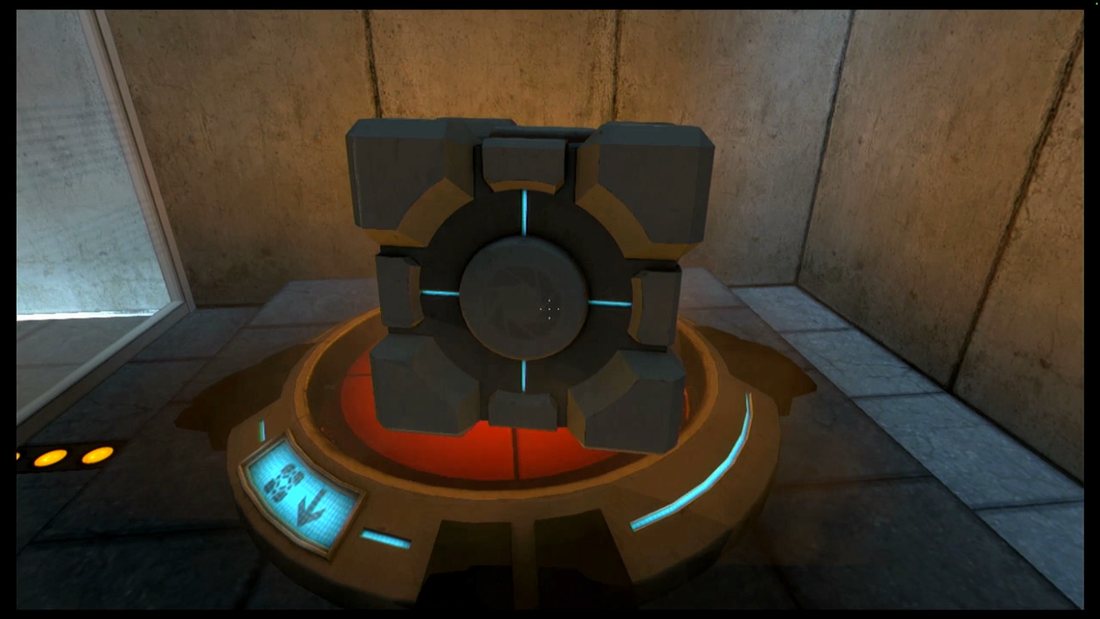
There's not really a deep story to it. You solve the puzzles, the AI gets a bit more crazy as you go, and that's the point.
Play it with someone else
Here's the recommendation I'd push hardest. My son did most of the controlling while we sat and worked the puzzles out together, and it's a fantastic way to play — particularly in Portal 2, where the puzzles get very challenging indeed. Solving them jointly is far better than watching someone else figure them out for you, which is also exactly why I stopped playing early on camera. These first few chambers give nothing away, but past that you want to be the one having the lightbulb moment.
Buy both, and buy them together
If you're going to play Portal, get Portal 2 as well. It picks up straight after the events of the first game, and because the first one is so short you'll want more anyway. Portal 2 is a full-blown game with far bigger, more intricate maps and a lot more to think about — for better or worse — including gels that let you bounce and slide, which the first game never had. Stephen Merchant voices Wheatley, one of the AIs you meet, which is very funny, and J.K. Simmons turns up as Aperture's founder Cave Johnson. You can play Portal 2 cold, but there's just no point.
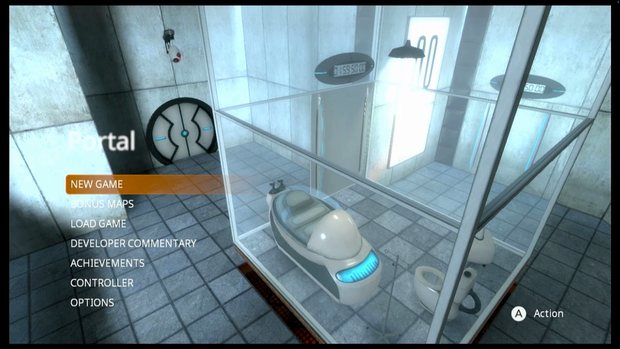
On value, the Switch bundle is the obvious call: both games for around £13 at the time of recording. The Orange Box on Xbox 360 is about £20, though then you're getting Half-Life 2, which is the main reason to buy it. It's on Steam too.
One thing I got wrong when I recorded this, and it's worth putting straight: I said Portal was never sold on its own. It was — the Windows version went on sale as a standalone retail product in April 2008, a few months after the Orange Box, and a version called Portal: Still Alive followed on Xbox Live Arcade that October. What's true is that it's far harder to find on a disc by itself than Portal 2 is, because Portal 2 was always a full-price standalone release.
Nearly twenty years on — and I can't quite believe I've just typed that — Portal absolutely holds up. Clever, innovative, great-looking, genuinely funny, and it leaves you wanting more. Maybe that's the best criticism a game can have.