I want to get my reasoning in before the comments start, because what follows isn't a case of a game ageing badly, and it isn't a case of "well, it's on the Mega CD, what did you expect?" Road Avenger falls down for a much simpler reason than either of those. It's barely a game at all.
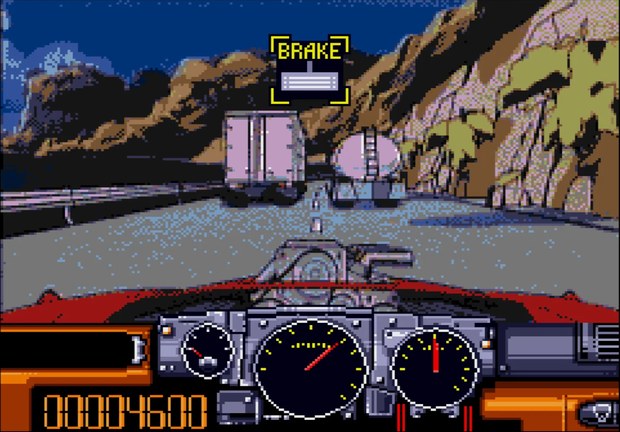
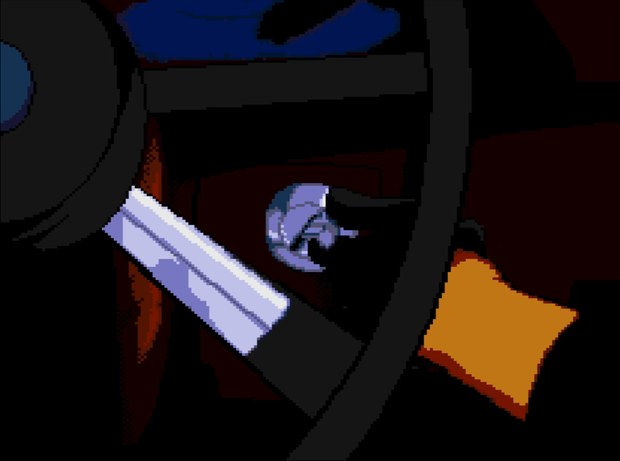
What it is, is an interactive movie. You're not driving. You're watching an animated car chase and reacting to prompts on screen, hoping you hit the right one of four buttons — left, right, brake or turbo — before something horrible happens to you and your car. It's essentially an early version of the quick time events we'd see years later, except stretched across the entire game rather than tucked into the odd cut scene.
Where it came from
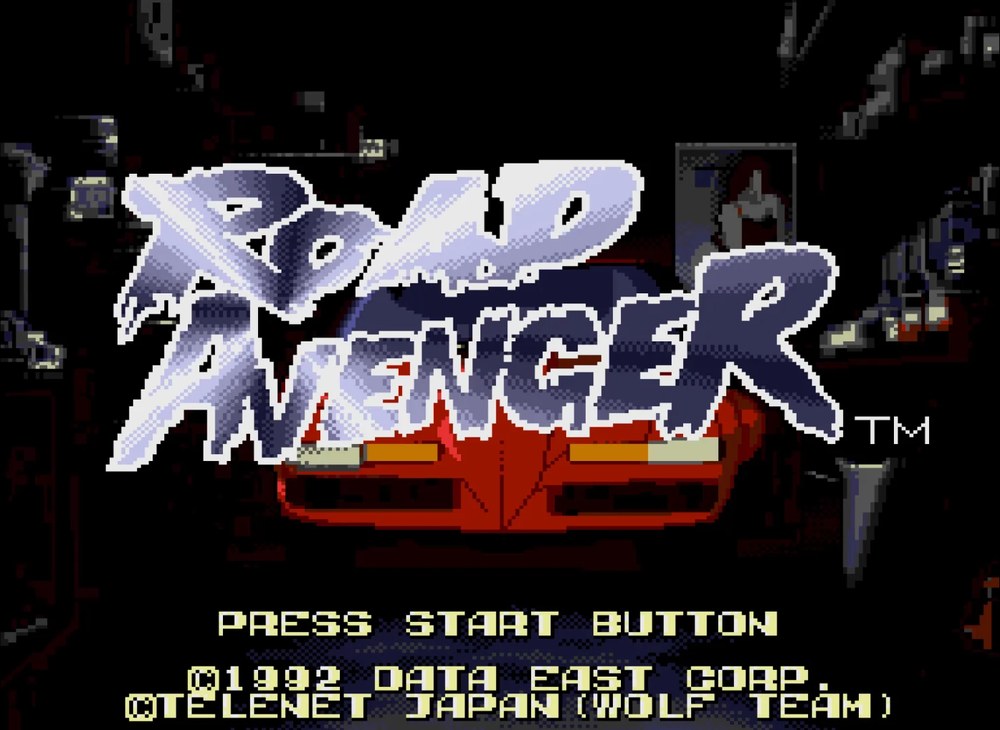
This one surprised me while I was digging into it. Road Avenger started life in Japanese arcades on 1 August 1985 as Road Blaster, and it was a laserdisc game — something I genuinely didn't know until I started reading up. Data East developed it, with animation by Toei Animation, and I'm pleased to report I guessed that right in the video.
It wasn't a one-off pairing, either. Data East and Toei had already made Cobra Command together in 1984, another laserdisc machine from the same Dragon's Lair moment, when the industry briefly convinced itself that the future of games was watching a cartoon and pressing a button at the right time. Wolf Team ported both of them to the Mega CD within months of each other — Cobra Command in 1992, and this one right behind it.
The disc arrived in Japan on 18 December 1992 as Road Blaster FX, then reached America in March 1993 and Europe in April, renamed Road Avenger. And so we're back to the Mega CD's favourite obsession: full motion video. Because apparently, in the early 1990s, the answer to absolutely everything was to put it on a CD and make it move.
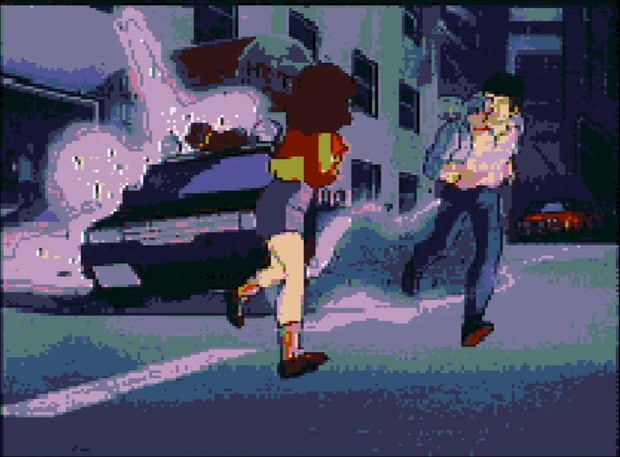
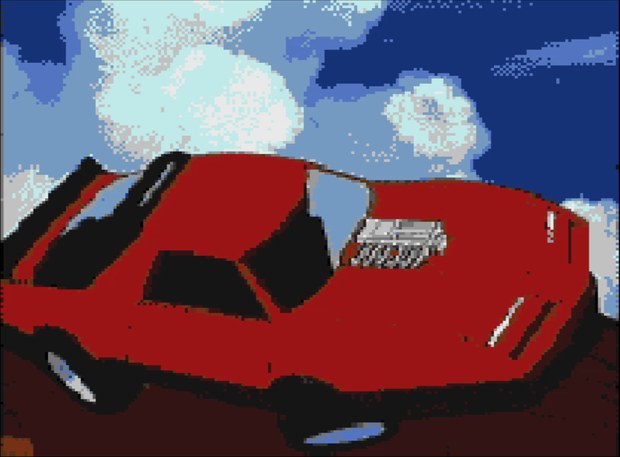
The premise is wonderfully daft. Your wife has been killed by a criminal biker gang, and you've decided the only reasonable response is to climb into your sports car and hunt down every last one of them. No police, no insurance claims — just revenge at roughly 100 miles an hour.
What actually playing it feels like
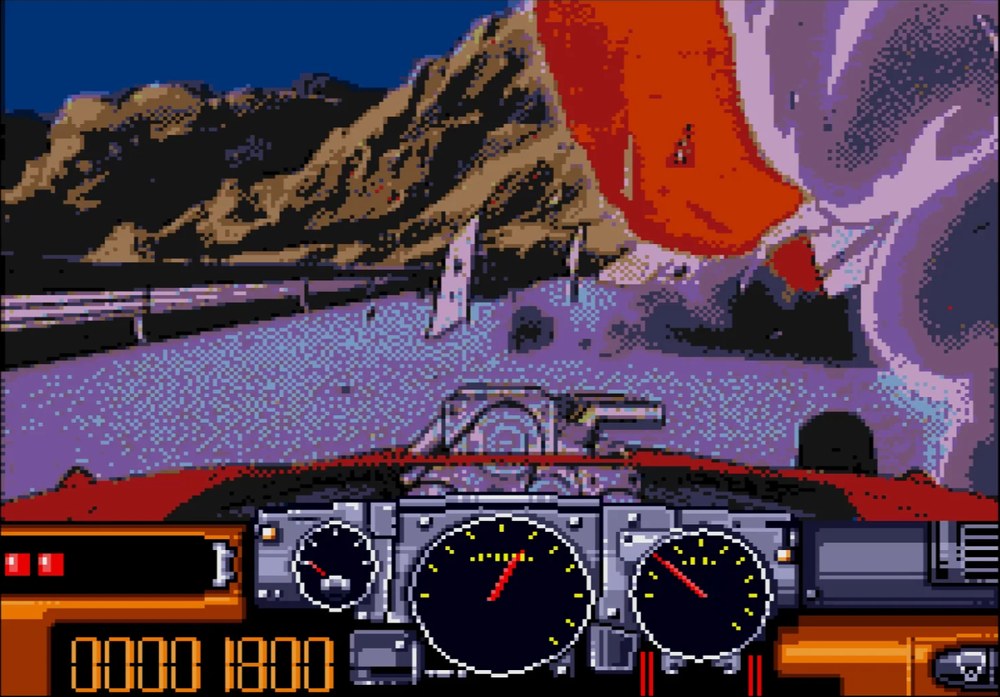
Frustrating, mostly. There are nine stages and things get progressively harder, which is a shame because I can't get past the first one. I've played this a handful of times now and I still can't reliably remember which button comes next. The whole thing is muscle memory: you learn each stage's sequence of buttons, in order, with timing, and that's the entirety of the skill involved. Get it wrong and you're treated to a fairly spectacular car crash — you'll see plenty of those in my playthrough.
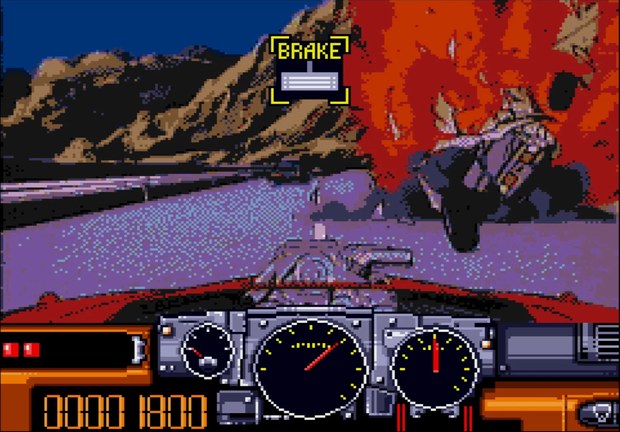
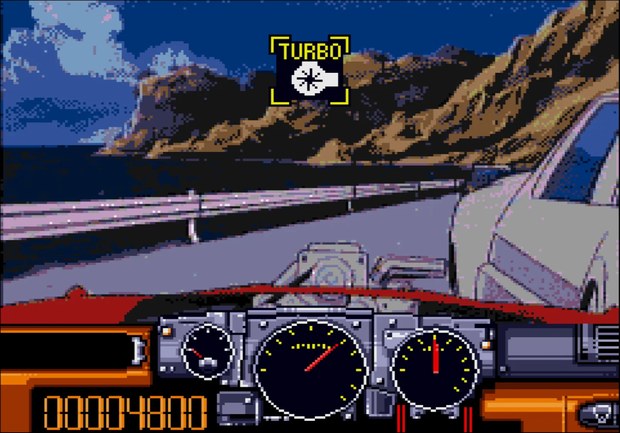
Every time you play through, it is the same thing. There's no variation in any of it. It's about as on rails as a game could ever really get.
Later on your reaction times need to be almost instantaneous, and there were a couple of moments where I'd swear I pressed the button and still went off the road. Some of that might be a bit of delay running it through the emulator — I've noticed the frame rate tends to suffer a little on FMV games that way — but I'm not going to make huge excuses for it. To be perfectly honest, having played it a few times, I'm happy never to go back.
Why it isn't lower
Three things keep it off the floor.
First, as a showcase it does the job. This is the game you'd have pulled out when you'd just bought a Mega CD, to make your mates go "wow" at something they'd never seen before. And I should be straight with you here, because I'd assumed otherwise before I looked it up: the press at the time didn't hedge the way I'm hedging. GamePro called it a masterpiece. GameFan singled out how much more interaction it gave you than the other discs doing the rounds. Nobody in 1993 was complaining that it was on rails, because in 1993 nothing else looked like this. The trial-and-error criticism — mine included — is entirely retrospective. It's the modern write-ups that flag the memorisation, and the turbo prompts that turn up with no warning whatsoever.
Second, it's hand-drawn animation rather than live action, and that matters enormously on this hardware. Animation compresses far better, it looks far better on screen, and you're not nearly so hamstrung by the Mega Drive's 64 colours. Compare it with something like Tomcat Alley, which has exactly the same fundamental problem of fixed footage, and Road Avenger looks the part.
Third, the soundtrack. It's really funky, I like the vibe and style of it, and it fits the game perfectly.
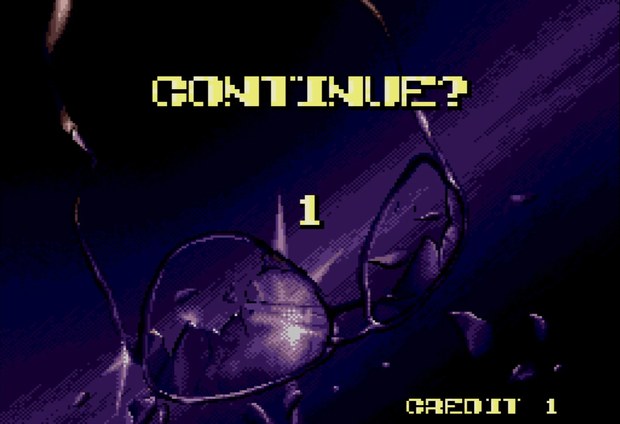
I did contemplate being generous and going higher, but no — I genuinely didn't enjoy it that much. If we were rating interactive movies from 1993, fine, great. As a game, sat next to the other things I loved in the early nineties, it just isn't interesting to me. It's frustrating, it's unforgiving, and there's no replayability because once you've memorised it there's nothing left.
Should you buy one?
Honestly, yes — if you want one FMV game for the system, make it this one. It's probably the best of what I'd consider a relatively bad bunch. It's not terrible and it's not fabulous.
The pricing is where it gets interesting. Here in the UK you're looking at around £10 to £20 for a complete copy — the going rate for a PAL disc sits right in the middle of that. Across the pond the American Sega CD version is $25 to $35 for a loose disc, or roughly $100 to $120 complete, which is the version I own. I picked mine up for £10 over here. For once, us Brits appear to have got the better deal.
If you've got fond memories of this one, I'd gently encourage you to go back and look at it through 2026 eyes. You might well decide you know exactly why you loved it. But it's not for me.