Silpheed is a really, really good game — but almost all of what makes it good is sitting behind the bit you're actually playing. Strip away the presentation and you've got a perfectly decent, perfectly ordinary vertically scrolling shoot 'em up. Leave the presentation in place, and you've got one of the most convincing demonstrations of what the Mega CD could do.
(And yes, for the longest time I read it as "Slipheed". It just looked Scottish somehow. It isn't. It's Silpheed.)
The trick that makes it work
Released for the Mega CD in 1993, Silpheed came from Game Arts and was a reimagining of a game they'd first put out on Japanese computers back in 1986. This version is a very different beast. Huge 3D environments, ships flying towards and away from the screen, massive structures grinding along beneath you. It looks like the Mega Drive has suddenly learned to throw around far more polygons than it has any right to.
It hasn't, of course. Those spectacular backgrounds aren't being rendered in real time at all — they're pre-rendered computer-generated sequences streamed straight off the CD, with the enemies, bullets and your ship drawn over the top. Game Arts reportedly created tens of thousands of background frames for it, and the effect is extraordinary. The console only has to worry about the things you're actually interacting with; the CD-ROM handles the spectacle underneath.
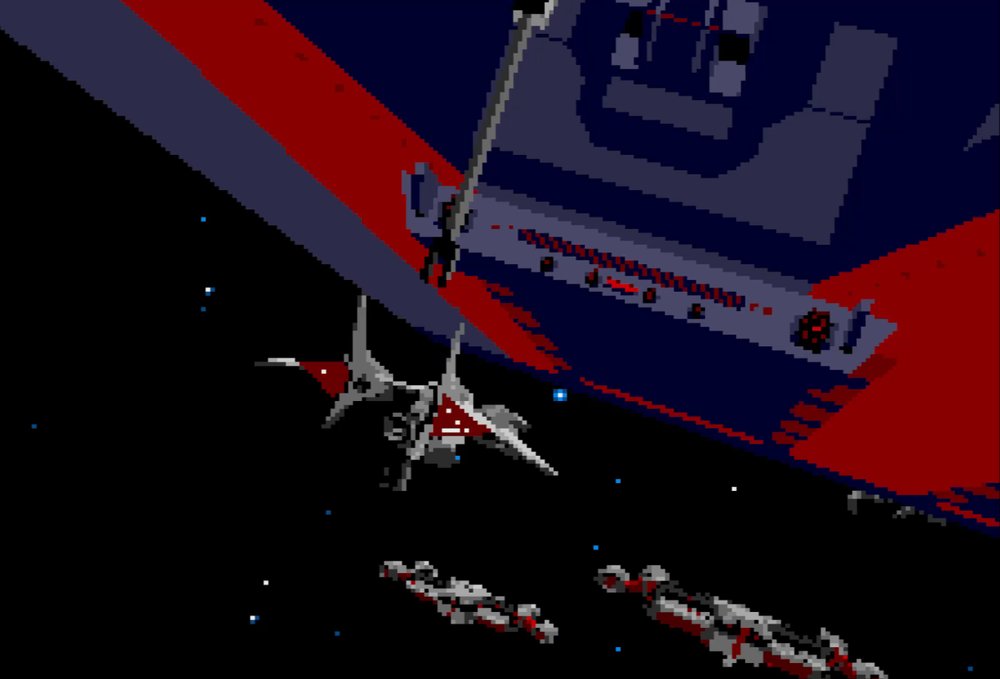
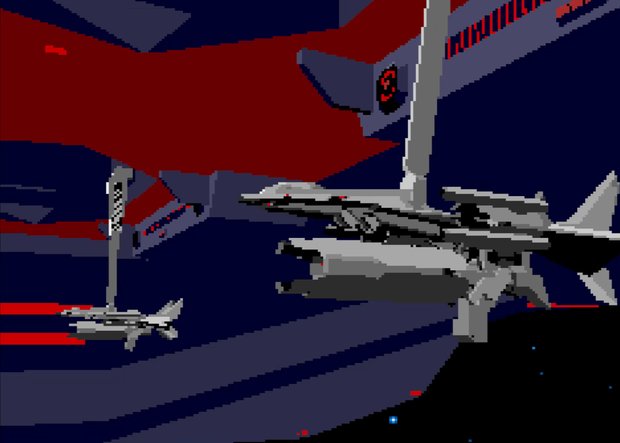
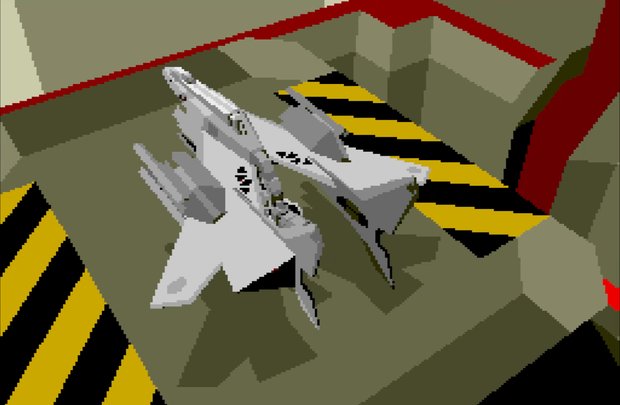
It's basically the gaming equivalent of looking incredibly busy whenever your boss walks past.
And for me, that's a far better demonstration of the Mega CD than simply saying "look, we've put a load of video in it". That's the bit I find genuinely impressive: Game Arts didn't shoehorn FMV in as a cutscene gimmick, they made it an integral part of the gameplay. The result is a 16-bit console running a game that really has no business being on a 16-bit console, because the whole thing is an illusion.
There's one moment in the first stage — a colossal explosion that appears to be happening in the game world — which is a lovely little showcase of what's going on. It looks like the engine is doing something remarkable. It's all pre-rendered. Fantastic.
What you're actually playing
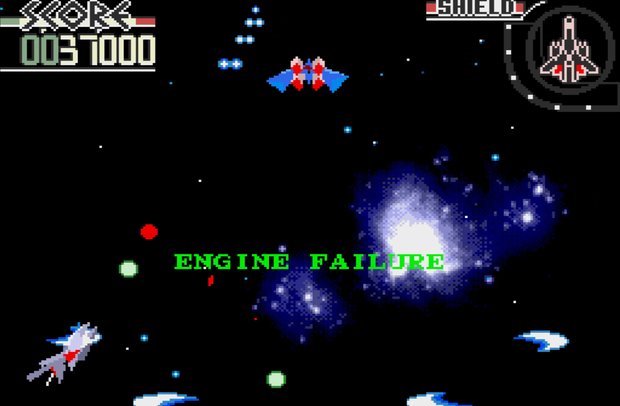
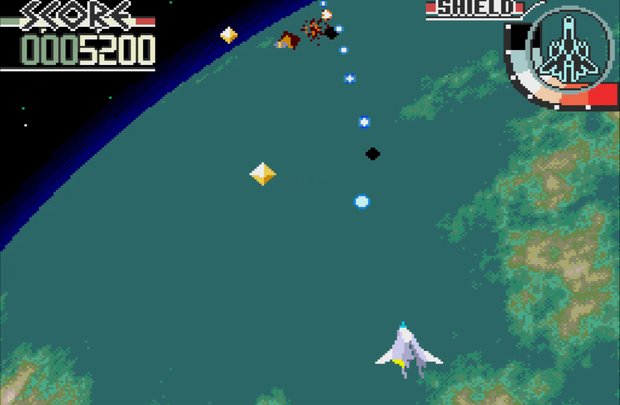
Underneath it all is a fast vertical shooter. You pick weapons for the left and right sides of your ship, enemies come at you from different positions within the pseudo-3D space, and it does a surprisingly good job of making you feel like you're flying through an enormous battle. The CD audio is lovely, and you've got actual human speech talking to you as you go, which adds a lot.
But be honest about the mechanics and it's a Galaxian-style shooter. If you take away the renders underneath, you'd notice very quickly that this is a game which would work perfectly fine on a stock Mega Drive. Contemporary reviews were positive — Electronic Gaming Monthly's four reviewers gave it 9, 7, 7 and 7, MegaTech called it "undoubtedly one of the best games yet for the Mega-CD", and Mega put it fifth in their all-time Mega CD list — but the same criticism kept coming up then that I'd make now: underneath the presentation it's a fairly basic traditional shooter. I'm making the same observation the critics did.
I'll also say it's hard. I can usually finish the first stage and I didn't even make it to stage two this time. Some of that is me. Some of it, I suspect, is the emulator — the frame rate is genuinely rough and there's a bit of a delay that catches you out. I know everyone says that, but it definitely feels smoother on the console proper, and the console experience should be the authentic one. A couple of things I worked out the hard way: you can't just hold the fire button down, and those bonus capsules will damage you if you fly into them rather than shooting them open first — you still get the pickup, mind.
So where does that leave it?
It's buoyed up by the spectacle. Through 1993 eyes you'd have been blown away, because you simply wouldn't have seen games looking like this on other platforms. The presentation doesn't just decorate the game, it improves it — gives it depth, gives it that X factor, makes it a richer experience. That's why it lands on the higher end for me.
It's brought down by the fact that the gameplay itself is nothing special. It's okay. It's good fun — who doesn't love a space shoot 'em up? — but there are better ones out there if that's specifically what you're after. And maybe that's fine. Maybe that kind of game doesn't need messing with.
One last practical note: Silpheed isn't expensive to pick up secondhand, which matters on a system where some titles are fetching upwards of £700 because the console didn't sell well and the games are correspondingly rare. If you've got a Mega CD or a Sega CD, this is one of the easy ones to say yes to.