Super Mario Land is one of my absolute favourite games, and certainly one of my favourite handheld games. I've got fond memories of it from the early 90s, playing on a friend's Game Boy, and it's one of the very few Mario games I've actually completed — albeit about thirty years ago now. There's very little to fault on it, though I'll admit it has dated a little.
What makes it special isn't that Nintendo squeezed the NES Mario onto a tiny screen. They didn't. They built something completely different, specifically for that monochrome display and very limited hardware, and in many ways they made exactly the right compromises.
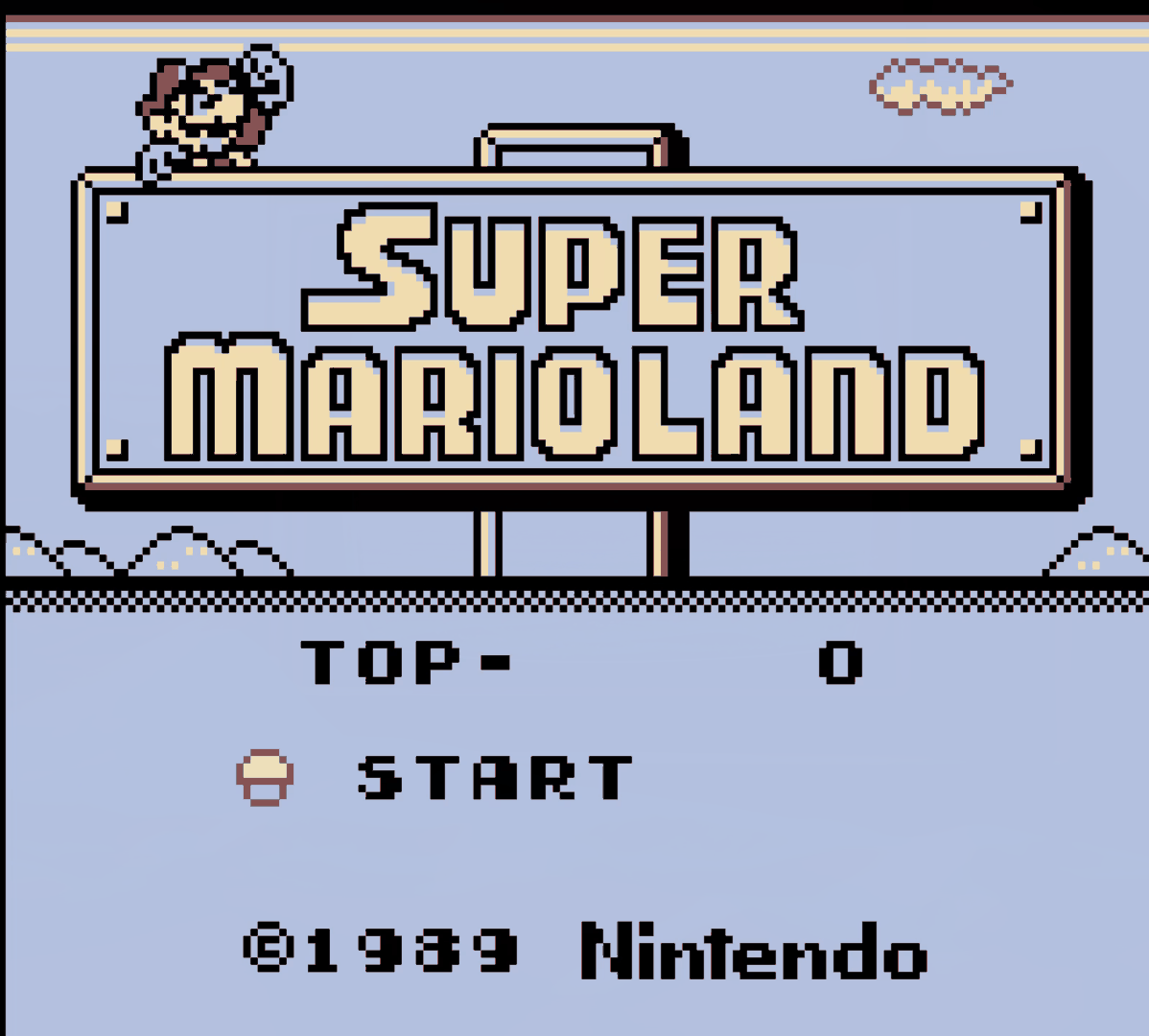
The strangest setting in a Mario game
Instead of rescuing Princess Peach, Mario heads for the mysterious kingdom of Sarasaland — which, I'll be honest, I only discovered while doing my research for this and had never realised before. There he's up against the alien villain Tatanga, who has kidnapped Princess Daisy. This is Daisy's very first appearance, which is a nice bit of trivia in itself.
Across four very different worlds you go through ancient ruins, tropical islands, giant Easter Island-style statues and China-inspired landscapes, before facing Tatanga in his spaceship. Even today that's one of the strangest settings ever seen in a Mario game, and with this series, that is really saying something.
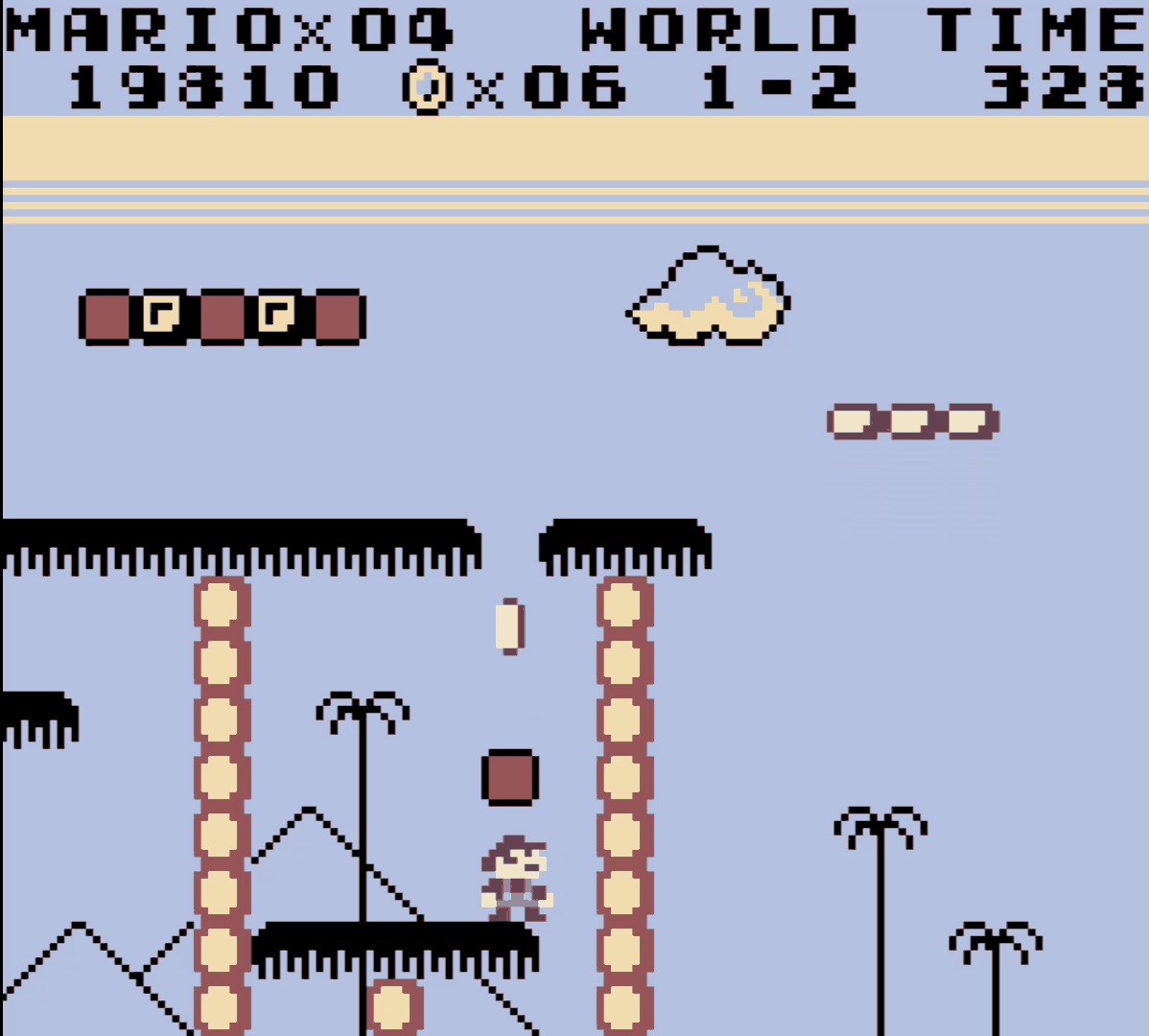
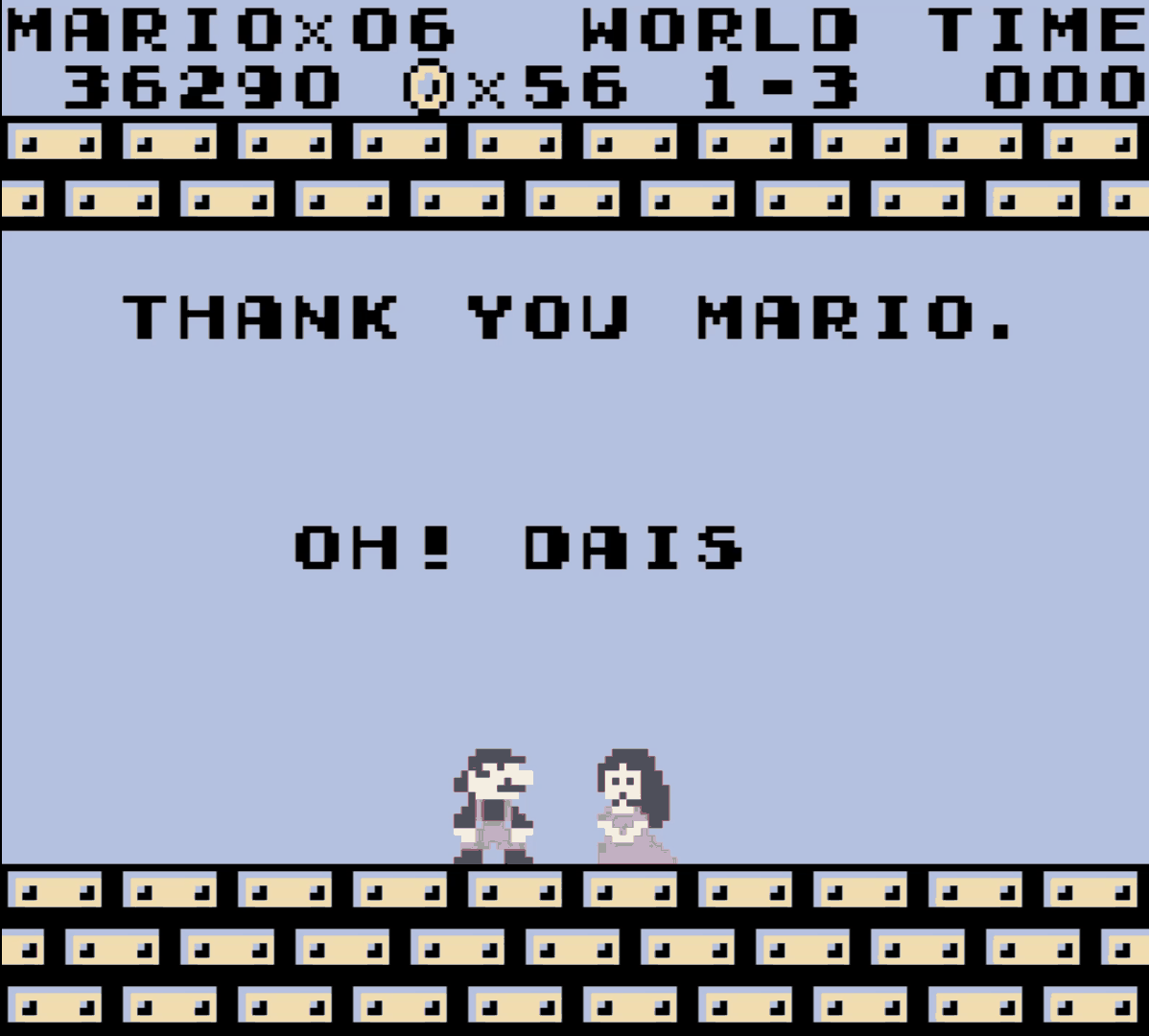
At first glance it all looks familiar — run, jump, collect coins, grab mushrooms and fire flowers — but there are surprises everywhere. The fire flower doesn't give you bouncing fireballs so much as small rapid-fire projectiles. The enemies aren't the usual Goombas and Koopas; you get creatures drawn from Egyptian mythology, sea life, and completely original designs. And Mario moves noticeably quicker than he does in Super Mario Bros, which makes the whole thing feel snappier and, I'd say, a bit more challenging.
The shoot-'em-up levels are the best bit
The biggest surprise comes in Worlds 2 and 4, where the platforming stops and Mario climbs into a submarine or a plane for full-on scrolling shoot-'em-up levels. The submarine one I absolutely love — it's so much fun, and it owes far more to something like Gradius than it does to Mario. Nothing like it existed in the series at the time, and it's never really come back, which I think is a shame. It's also part of what makes Super Mario Land feel so distinctive today.
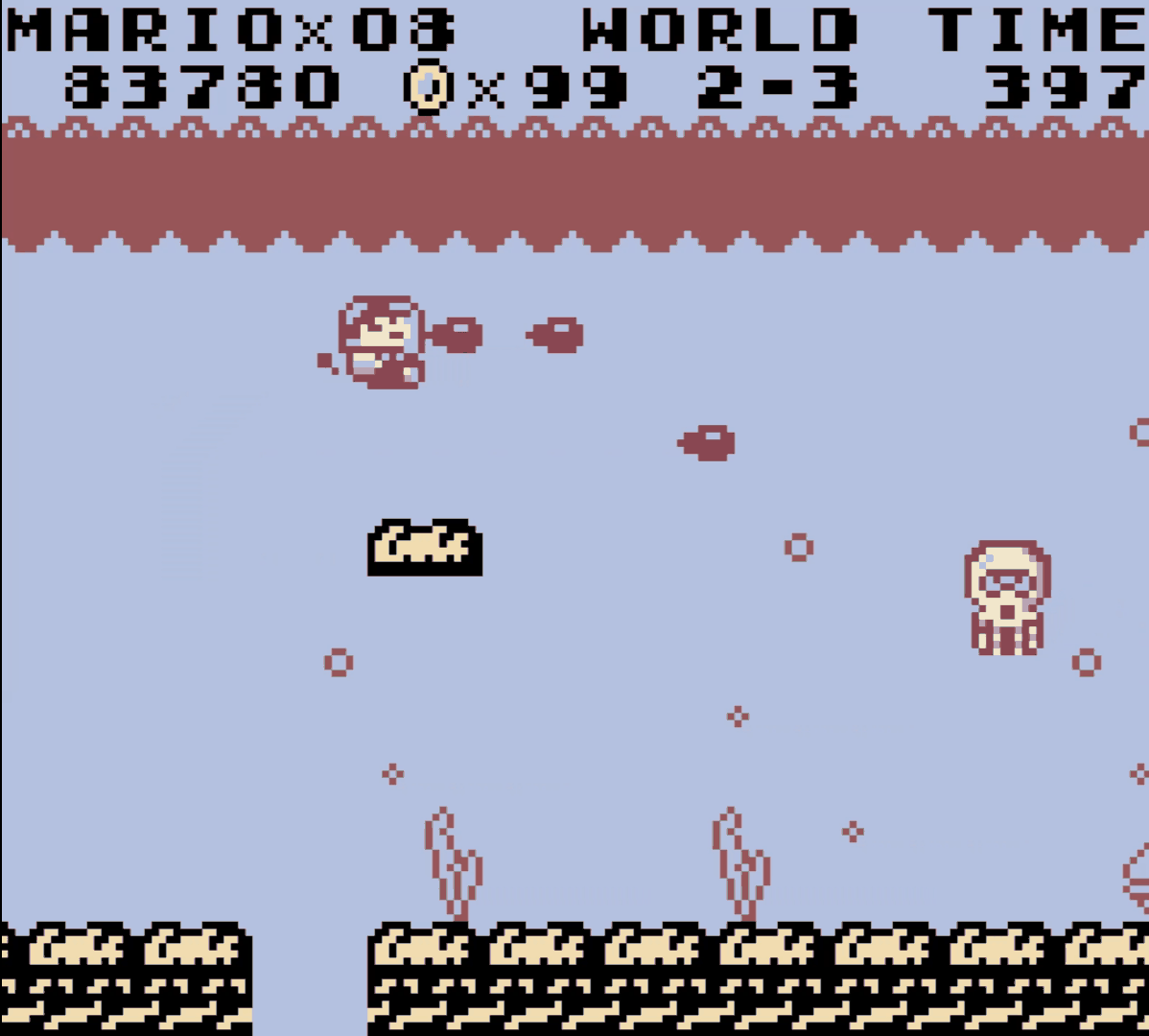
You have to be careful not to shoot some of those dudes as well — you generally just stay down in the bottom corner until the boss shows itself.
Elsewhere, the constraints show. There are a lot of repeats in the level design — come out of a pipe and things look remarkably familiar — which I assume was just about making the best use of the resources. It genuinely doesn't matter. What I really like is how much they achieved with so little: you've got a tiny amount of screen real estate to work with and they still got proper texture out of it. Later games like Donkey Kong and Super Mario Land 2 really start squeezing every inch out of the hardware, but this one got there first.
A word of warning: don't play it the way I did
For the gameplay section I was emulating, and I had it running as Game Boy Color, which is why you'll see colour rather than monochrome — the Game Boy Color would work out which colours suited the original game, and it does give you slightly better visual cues on things dropping in.
The problem was the PlayStation 4 controller. There's a small input delay and it caused me a real headache all the way through. Mario responds too late, you correct when you think you're about to fall off and it catches you out, and there's one bit I normally sail straight through that I simply couldn't finish. If I were rating the game on that experience alone, it'd be about one out of five, because it is absolutely horrendous. So play it on an original Game Boy, or on an emulator that behaves itself.
Why I still prefer it to the sequel
Super Mario Land was eventually overshadowed by Super Mario Land 2: 6 Golden Coins, and on paper the sequel wins on everything. It looks much better. You can scroll left, which you can't here — like the original Mario Bros, once you've moved on, that's it. You can save. There are loads of advantages to it, and it's closer to the Mario you'd recognise from the NES or SNES.
And yet if I'm picking up the Game Boy, this is always the first one I go to. I think it's the soundtrack — the theme tunes are really cool and I find myself humming them all the time. It feels like proper Mario while still being its own thing.
It's short — about an hour and a half once you know what you're doing — the graphics are simpler and there's less variety. But that misses the point. It wasn't trying to replace Super Mario Bros. The controls are responsive and intuitive, the pace is brisk, and it's the perfect game for a quick session.
Critics loved it for bringing Mario to a handheld without losing the feel of the console games, and players couldn't get enough: over 18 million copies sold, making it one of the best-selling Game Boy games ever. Its success helped convince millions that handheld gaming wasn't just a novelty. Tetris obviously plays a huge part in that story too, but without Super Mario Land I think it's hard to imagine Nintendo's handheld legacy ending up where it did.
Coming up on Friday I'm digging into exactly that — why the Game Boy became such a phenomenon when the Game Gear and Atari Lynx both had colour screens and, on paper, looked better. There's a clue in the word "pocket".