The Game Boy shouldn't really have won. We've said it a few times this month: Nintendo's little monochrome handheld went up against technically superior machines like the Atari Lynx and the Sega Game Gear and absolutely destroyed them. But the hardware was only part of that story. When the Game Boy launched outside Japan in 1989, one of its biggest weapons wasn't Mario, it wasn't Sega, and it wasn't even made by Nintendo. It was a little puzzle game created several years earlier, thousands of miles away, on a Soviet computer — and it didn't even have proper graphics.
Here's my verdict up front. Did the Game Boy make Tetris? Not entirely — Tetris was already spreading before Nintendo got involved. Did Tetris make the Game Boy? Again, not entirely; the machine had Mario, Zelda, the Nintendo library, and eventually Pokémon for a second life. But the Game Boy made Tetris portable, and Tetris made the Game Boy universal. More than 35 years later, I can't think of a more perfect pack-in title on any machine.
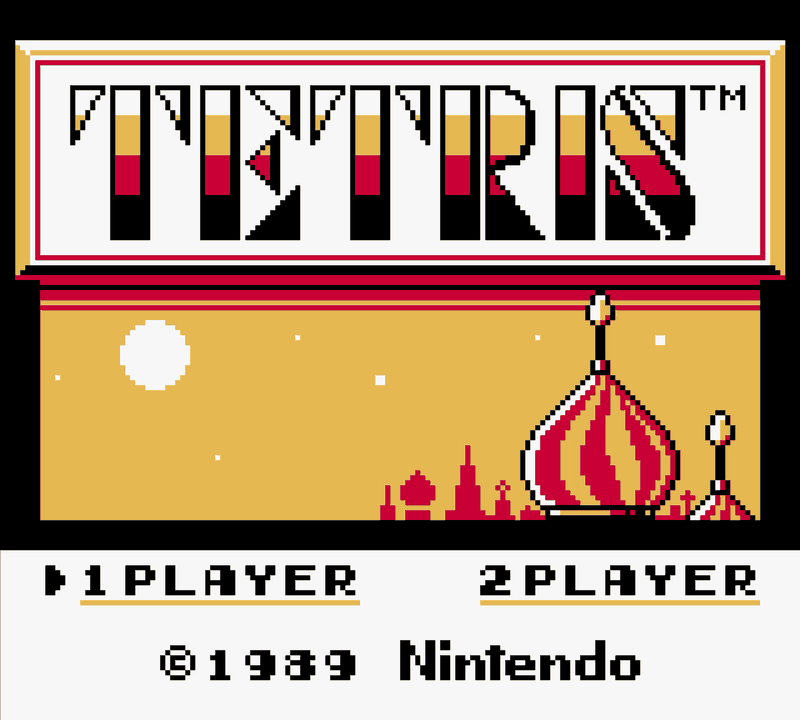
From pentominoes to a pocket phenomenon
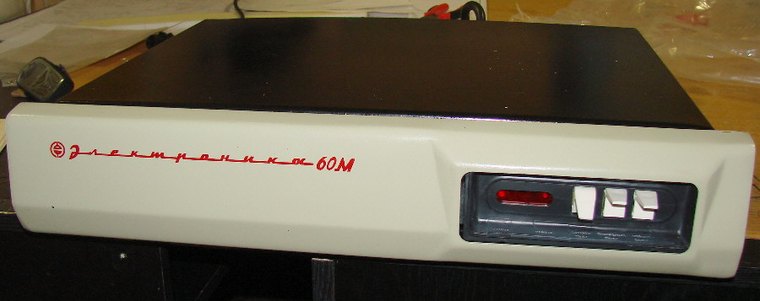
The story starts in Moscow in 1984, with Alexey Pajitnov, a computer engineer at the Soviet Academy of Sciences who had a fascination with puzzles — particularly pentominoes, shapes made from five squares. The Electronika 60 he was working on wasn't exactly designed for gaming, so the original version didn't use conventional graphics at all, and the five-square pentominoes were simplified down to four-square tetrominoes. Combine "tetra" with tennis, one of his favourite sports, and you've got Tetris.
The rules are beautifully simple: shapes fall, you rotate them, you complete a horizontal line and it disappears. People became obsessed almost immediately. Copies spread around Moscow, then across the Soviet Union, then into the West.

Except this is Cold War Soviet Union — you couldn't just sign a publishing contract and start collecting royalties. The international rights sat with ELORG, the Soviet state software agency, and from there things get messy. A British businessman, Robert Stein, tried to acquire them; deals were struck with Mirrorsoft in the UK and Spectrum HoloByte in the US; Tetris started turning up on Western computers; and eventually several major companies all believed they had legitimate claims across computer, arcade, console and handheld. Much of it came down to how loosely you read the word "computer" in a contract.
Enter Henk Rogers, who recognised how special Tetris was and knew Nintendo had a portable system on the way. Rather than untangling the chain of licensing deals, he went to Moscow and negotiated directly. He also met Pajitnov there — the start of a friendship and business relationship that mattered enormously later. It turned out some companies didn't own quite as much as they thought, and Nintendo secured what it needed for consoles and, crucially for us, handhelds.

The bundle decision
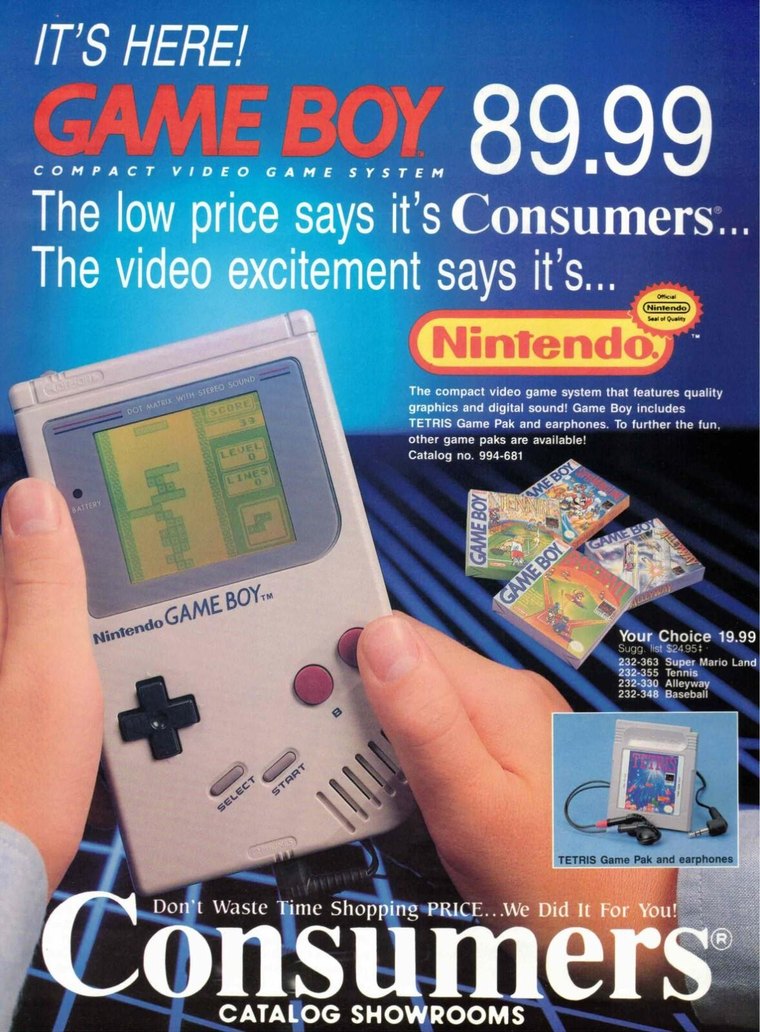
Nintendo then had a genuinely interesting call to make. Super Mario Land looked like the obvious pack-in — Mario had helped turn the NES into a phenomenon, so why wouldn't you? Nintendo of America's president, Minoru Arakawa, asked exactly that, and Rogers' answer was essentially: bundle Mario and boys will buy the Game Boy; bundle Tetris and everyone will buy it.
Whether every word of that conversation happened exactly as it's been told almost doesn't matter, because the strategy was bang on.
Mario appealed to people who already understood video games. Tetris required no gaming knowledge whatsoever — no enemies, no platforms, no characters, no complicated controls. Hand someone a Game Boy running Tetris and within moments they know what they're supposed to do. Tetris didn't show off what the Game Boy could do technically; it showed people why they needed one. The Game Boy version sold 35 million copies.
Why it works, and why it works here
Seven tetrominoes, rotate, clear lines, pieces fall faster. That's it. The genius is what emerges: constant small decisions. Do I clear a couple of lines now, or build higher and gamble on the long straight piece for a full Tetris? And when that piece refuses to appear, your nice organised structure becomes a disaster. It's one of those games where failure feels like your fault, so you immediately go again.
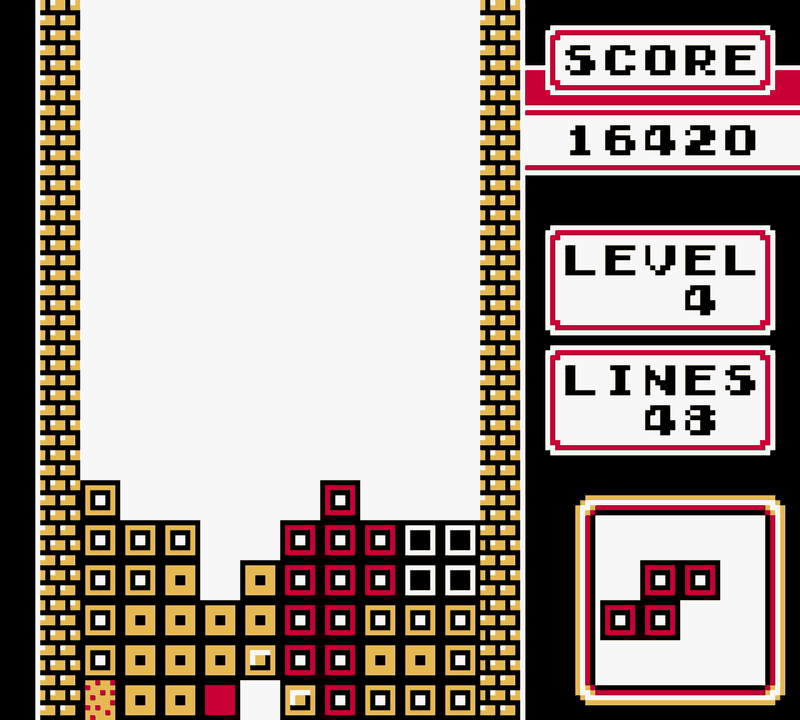
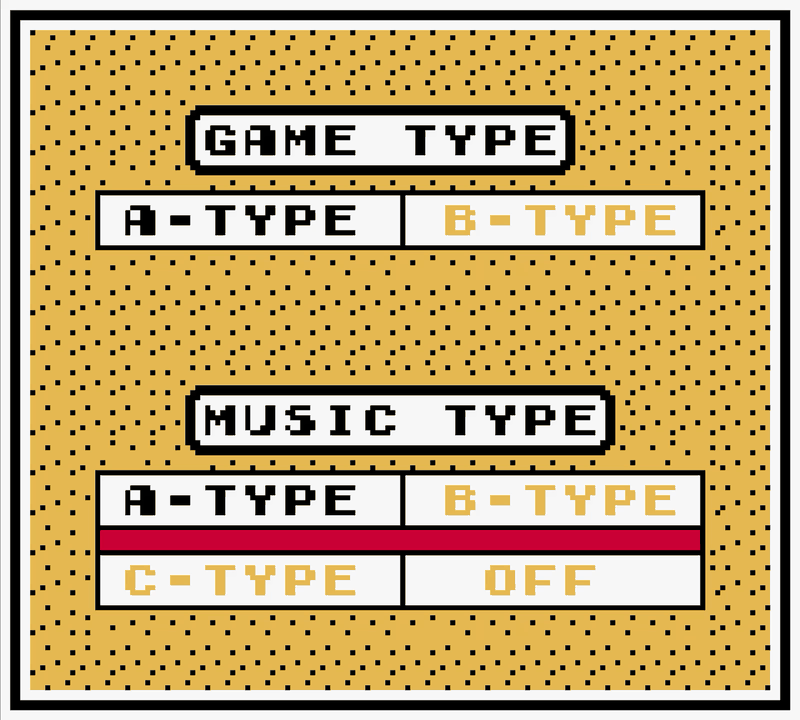
Crucially, Tetris on Game Boy doesn't feel like a console game compromised to fit a handheld. If anything the Game Boy makes more sense of Tetris than anything else. The monochrome screen doesn't matter. There's no fast scrolling, no backgrounds, nothing for the machine to struggle with — everything is clear and readable. Play for five minutes or an hour, and with that battery life, anywhere. Then there's the music, the A-type theme based on the Russian folk tune Korobeiniki, which for a lot of people simply is the Tetris song.
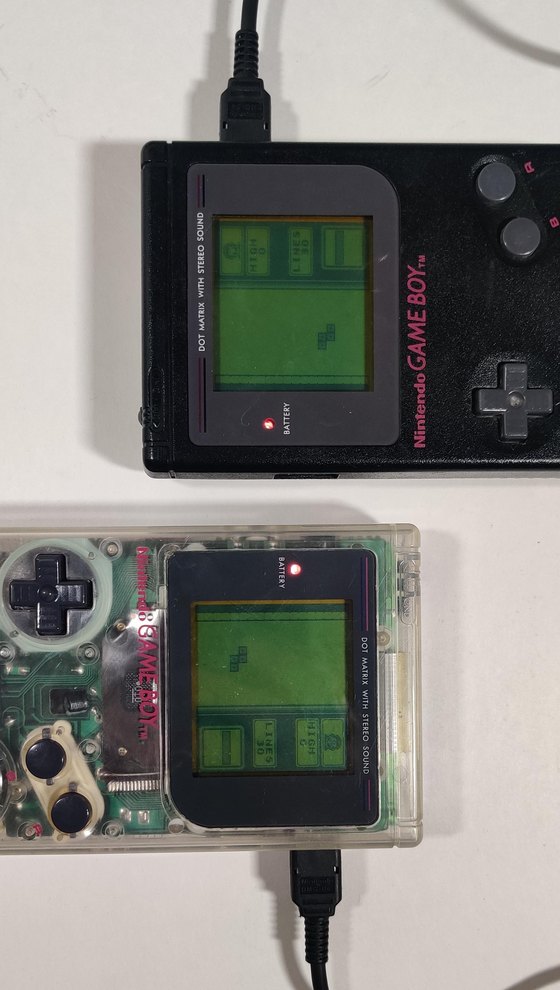
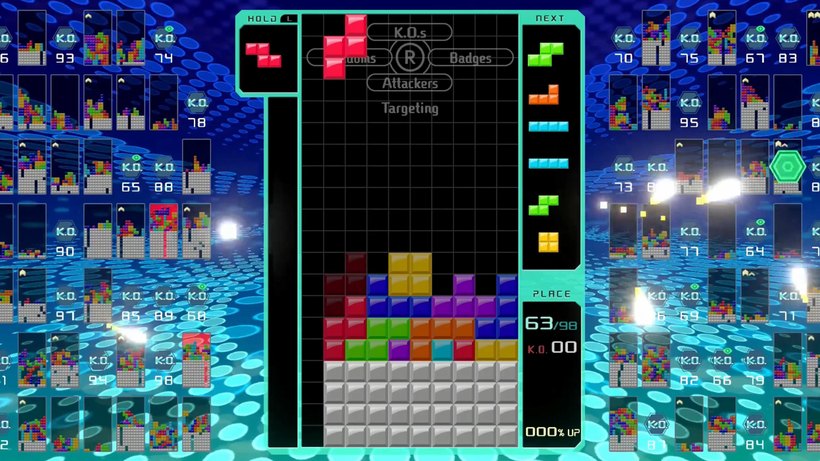
Don't overlook the link cable, either. Two Game Boys, two copies, and a solitary puzzle game becomes brutally competitive — clear multiple lines and you bury the person next to you. That idea runs all the way through to Tetris 99 on Switch: different tech, enormous difference in scale, same fundamental concept. It also proved something important about the Game Boy itself: these little handhelds could play together.
The bigger point
Atari could talk about the Lynx's colour screen. Sega could talk about the Game Gear's colour graphics. Nintendo could just hand you a Game Boy with Tetris in it and let you play — and the person they handed it to didn't have to be a gamer. Parents, aunties, uncles, grandmas. People with no interest in Mario played Tetris, and that made the Game Boy more than a portable console for children. Once millions were out there, Tetris benefited too, because tens of millions of identical machines were carrying the same game around the world. That's about as perfect an illustration of Gunpei Yokoi's philosophy as you'll find: the experience mattered more than the specifications.
There's a happier ending on the creator's side, too. After years without the financial rewards you'd expect from making Tetris, the rights situation was sorted in 1996, when Pajitnov and Henk Rogers founded The Tetris Company.
Tetris wasn't designed for the Game Boy. It was made five years earlier, thousands of miles away, behind the Iron Curtain — and yet it was almost the perfect Game Boy game. It didn't need colour, power or a big screen. It just needed something to carry it everywhere.
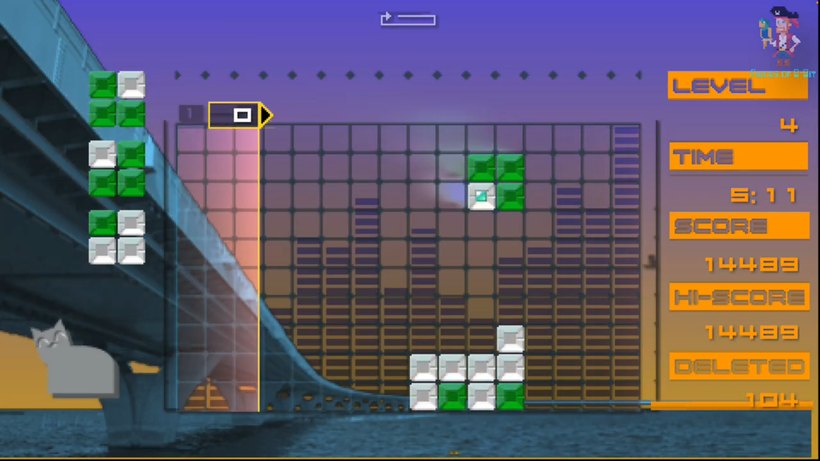
One honest confession to finish: plenty of block puzzlers have chased that success — Dr. Mario, Puyo Puyo — and despite everything I've said here, Lumines on PSP is probably my favourite of the lot. I've almost certainly played it more. But the original Game Boy version of Tetris is still the best Tetris for me, and its impact is in a different league entirely.

So: how do you play yours? Everyone has their own strategy — I tend to only rotate in one direction so I've only got one button to press, which occasionally backfires spectacularly. And if you can name another pack-in title with anything like the same impact, I'd genuinely like to hear it.